29/5/26
Today is a more peaceful – and shorter – day of sightseeing, than yesterday.
Kopan Gompa
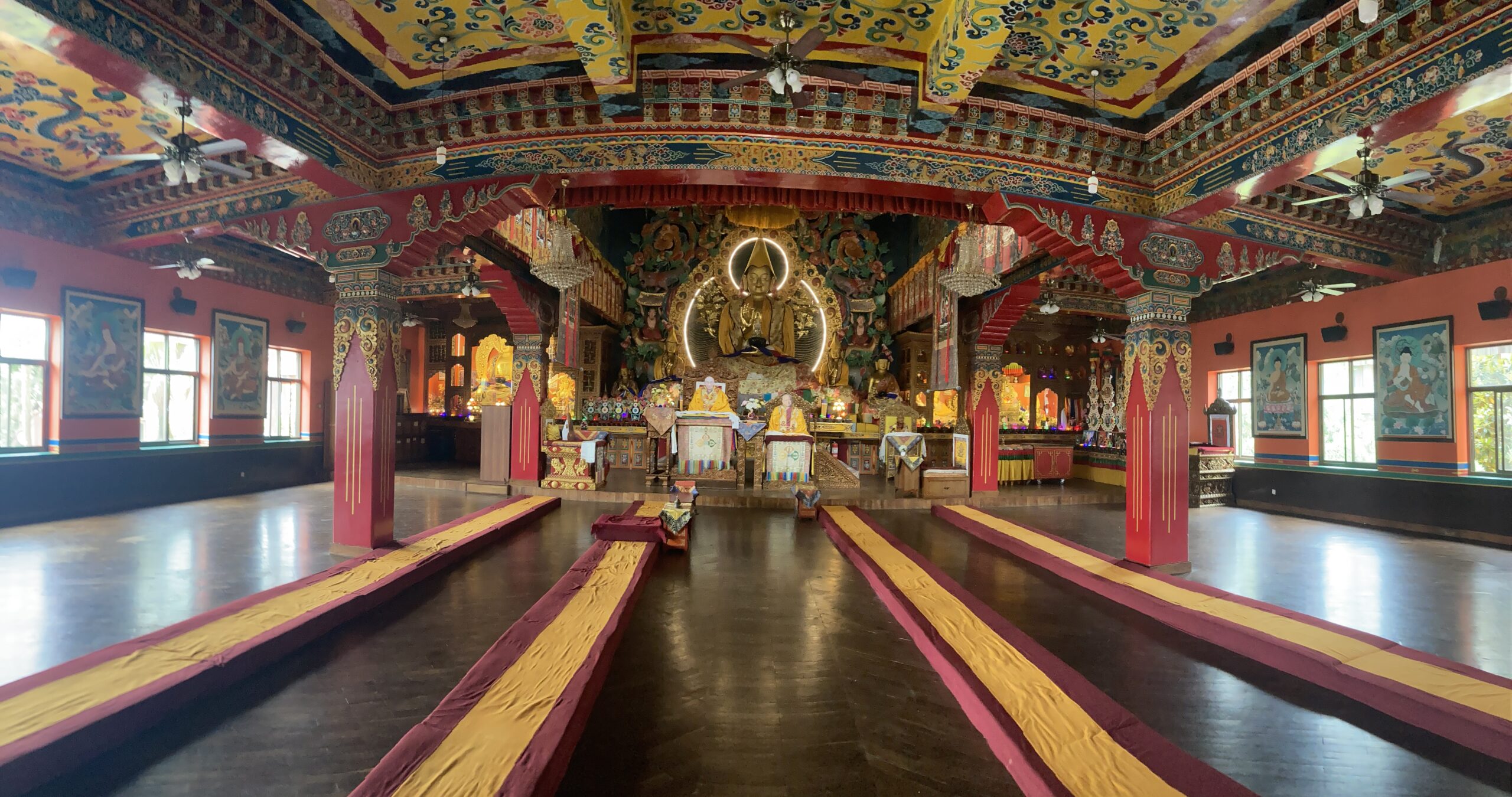
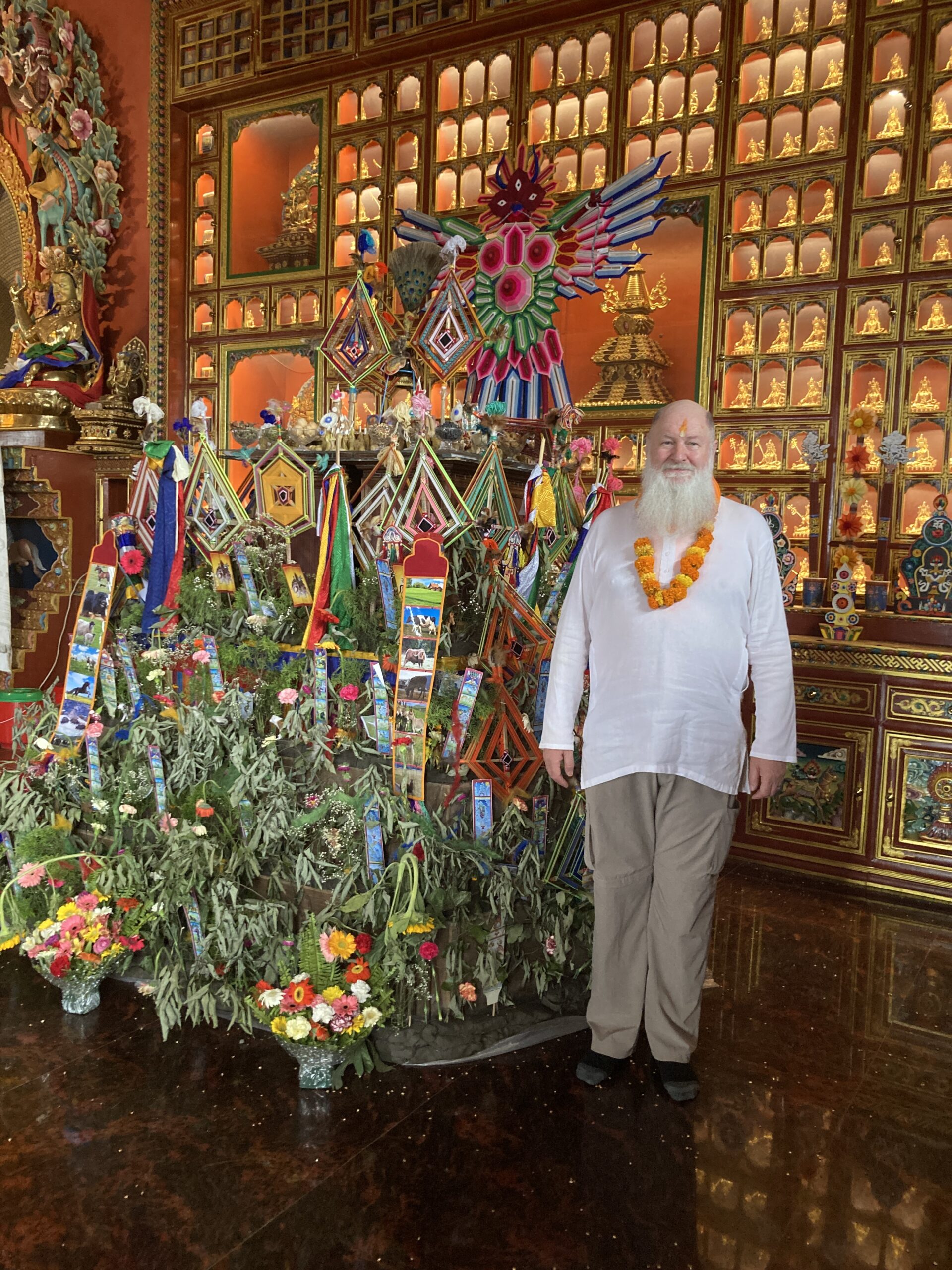
We begin at Kopan Gompa (Monastery), home of Mahayana Buddhism in Kathmandu, where I find, in the library, a little bookshop, and – amongst one or two other finds – buy a copy of Hermann Hesse’s Siddharta, a book which I read in the early 1980s, and which it would be good to read again. In novel form it tells the story of the Buddha’s life, which is the centre of all the various forms of Buddhism. The main shrine is beautiful- like that at Namobuddha – but somehow the Dalai Lama seems more prominent here. Tibetan Buddhism is a form of Mahayana and very strong here. Mahayana Buddhism includes many boddhisatvas along with the teachings of the Buddhas, and their own many and varied guides to the Way. Very strong here at Kopan is the Boddhisatva Avalokiteshvara, whose specialisation is compassion.
At the Sleeping Vishnu
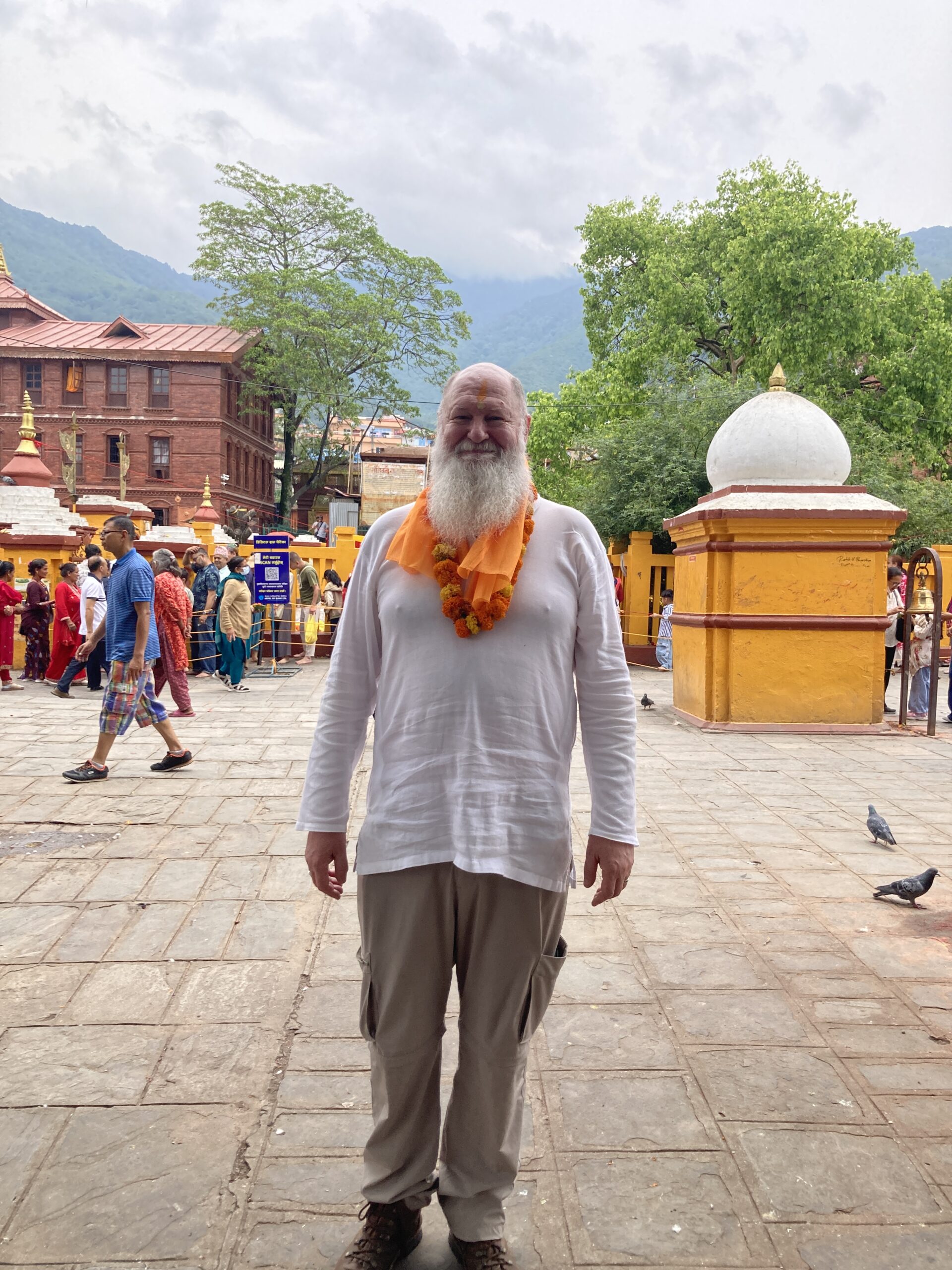
We then go to the Sleeping Vishnu – the Buddhanilthankah Temple. This 7th century carving from a single slab of basalt rock is sacred to the Buddhists, too, as an emanation of Avolkiteshvara. Completing a trinity of sanctity, this statue is also regarded by the Shaivites as the emanation of Shiva known as Nilakanta Shiva. Young boys trained at the Temple monastery preside here, chanting, and placing tika on foreheads and garlands of flowers around necks. I am very touched by the whole experience, despite the long queue! The chanting here is quite mesmerising, and learning it from my guide, I repeat the mantra as I pay homage to the shrine.
Lama at Triten Norbutse Bonpo Monastery
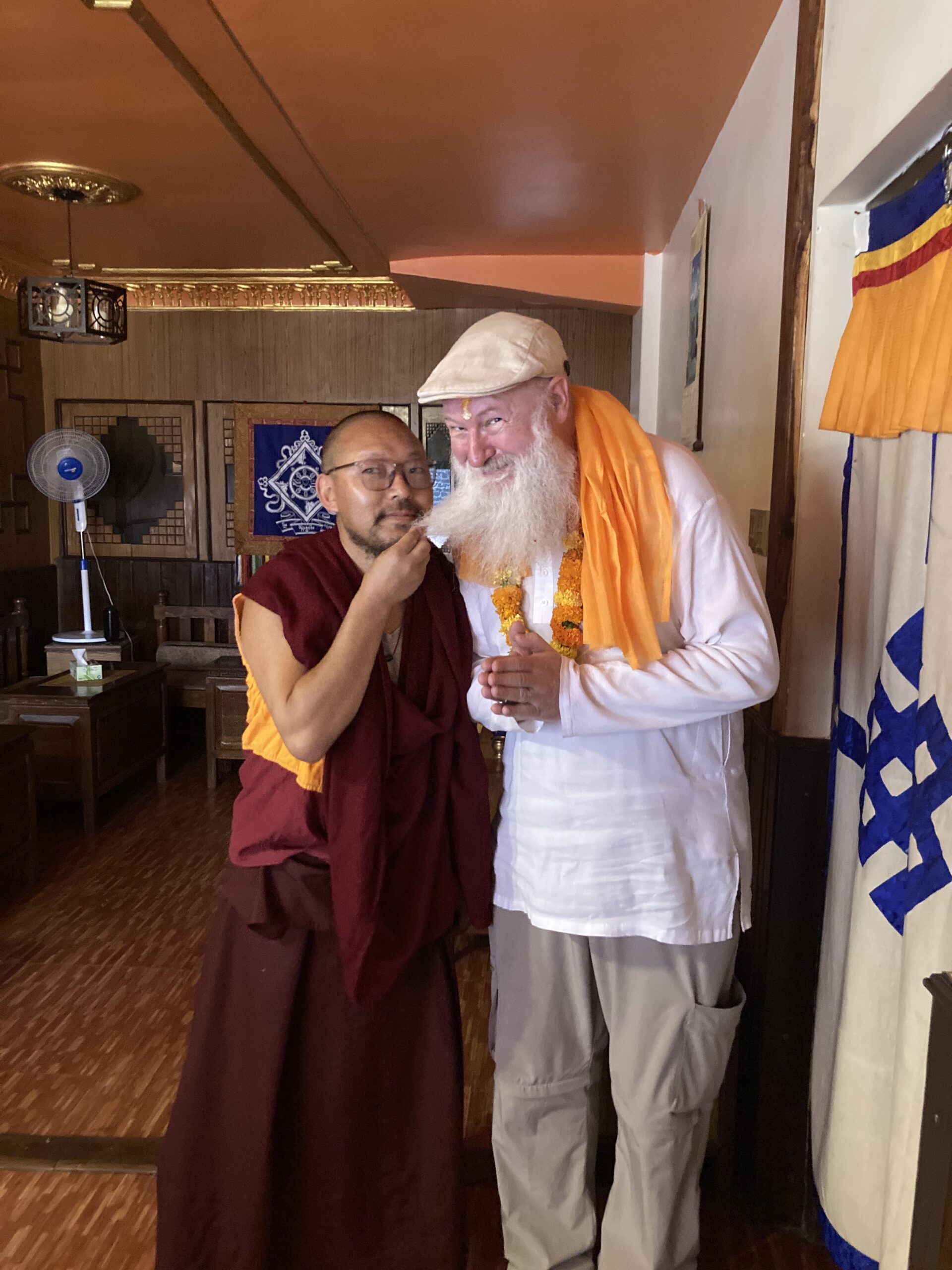
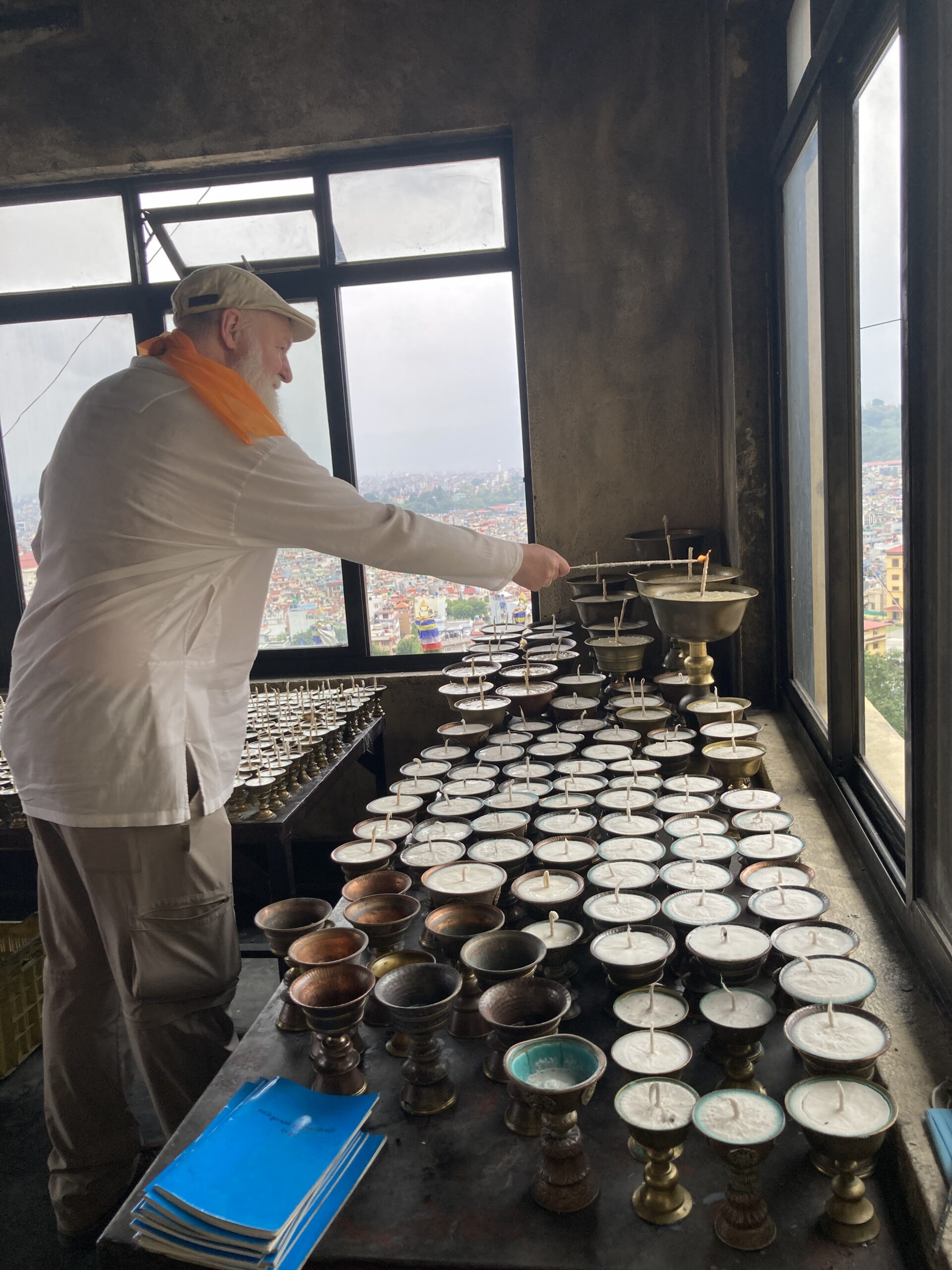
Thirdly we climb up into the hills again for our second Buddhist Temple of the day, this time the Triten Norbutse Bonpo Monastery. Bonpo is one of the lesser known schools of Buddhism, with its stronghold in the West of Nepal, rather than in Kathmandu, but there are 280 monks here, and I met a lama – who liked my beard – and invited me to light a large butter candle, saying a prayer for my loved ones, before going in to see the main the temple.
Lighting a butter candleCotton Mandalas in the Main Gompa
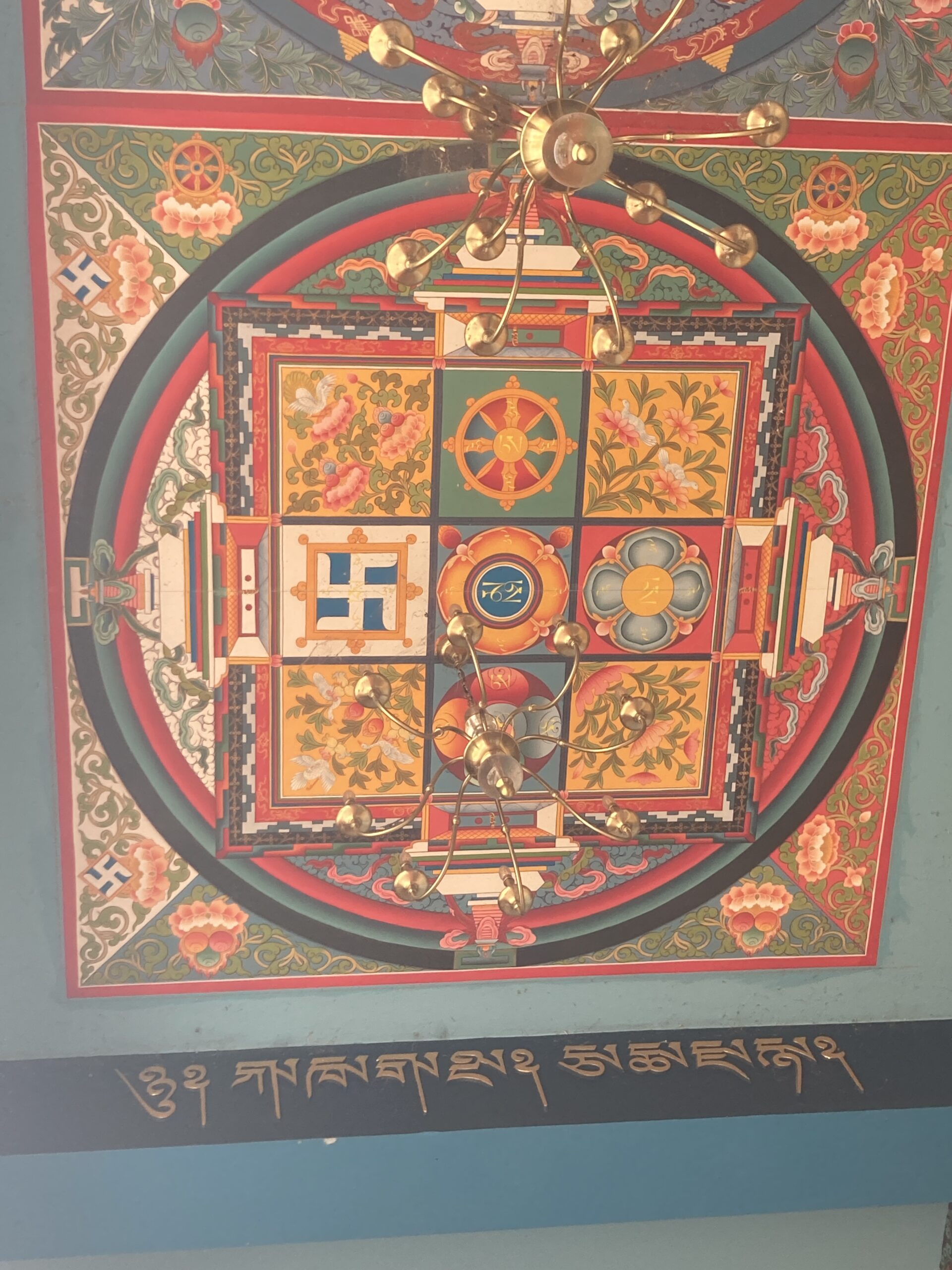
Here the very ancient (pre-Buddhist) roots of Bonpo are visible in the unique cotton mandalas, and the intensity of their relationship with the Buddha in the – equally unique – and huge mandalas painted directly onto the ceiling.
Huge painted mandalas on the ceiling
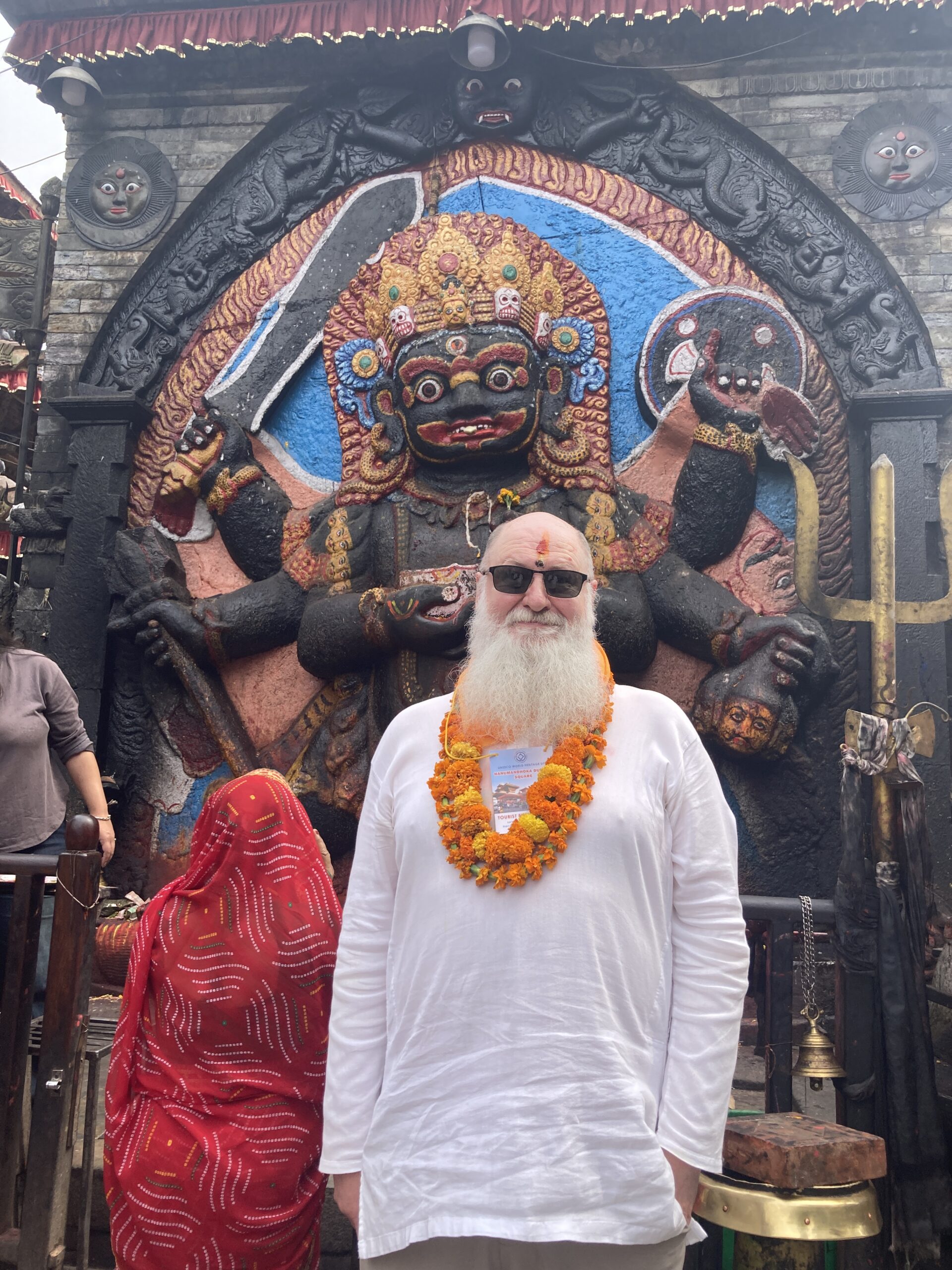
Lastly, we pass through Kathmandu Durbar Square, the medieval royal heart of the city, with its 15th and 16th century pagodas, and its early 20th century neo-classical dictatorship palace. Most interesting, for me, is the Kaal Bhairav – the great Shiva in his aspect of destroyer and protector. The presiding priest places the unique black tika of this emanation of Shiva on my forehead. In one of the many shops, I acquire a brass Kaal Bhairav to take home.
Collected by Jaya, my guide, and my driver, Ram, in our little Hyundai (they let me sit in front, thankfully, to stretch my long legs) I discover they are friendly and knowledgeable, and clearly pleased to have a tourist who seems not just genuinely interested in their religion and culture but both vaguely knowledgeable about it and keen to learn more.
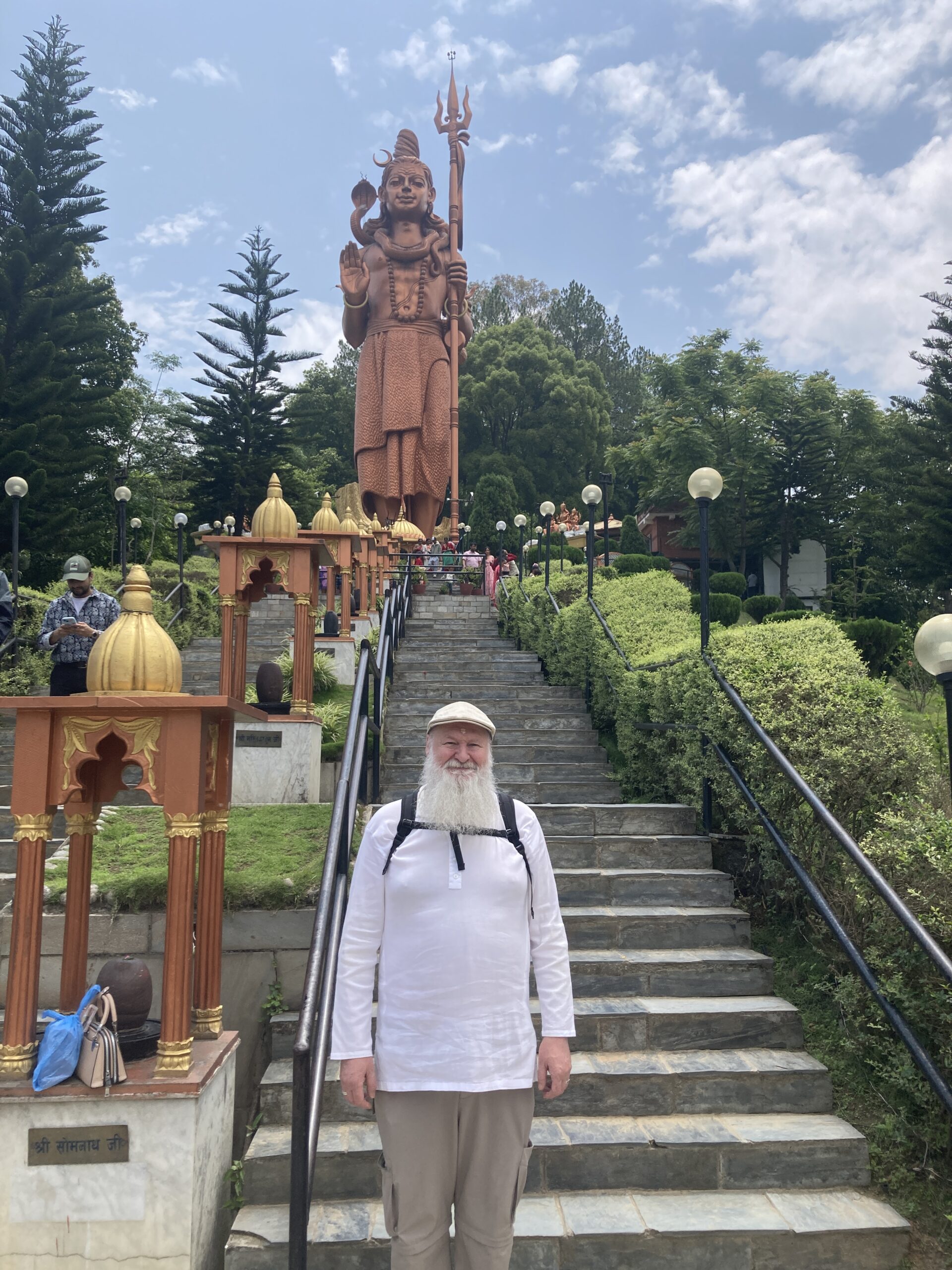
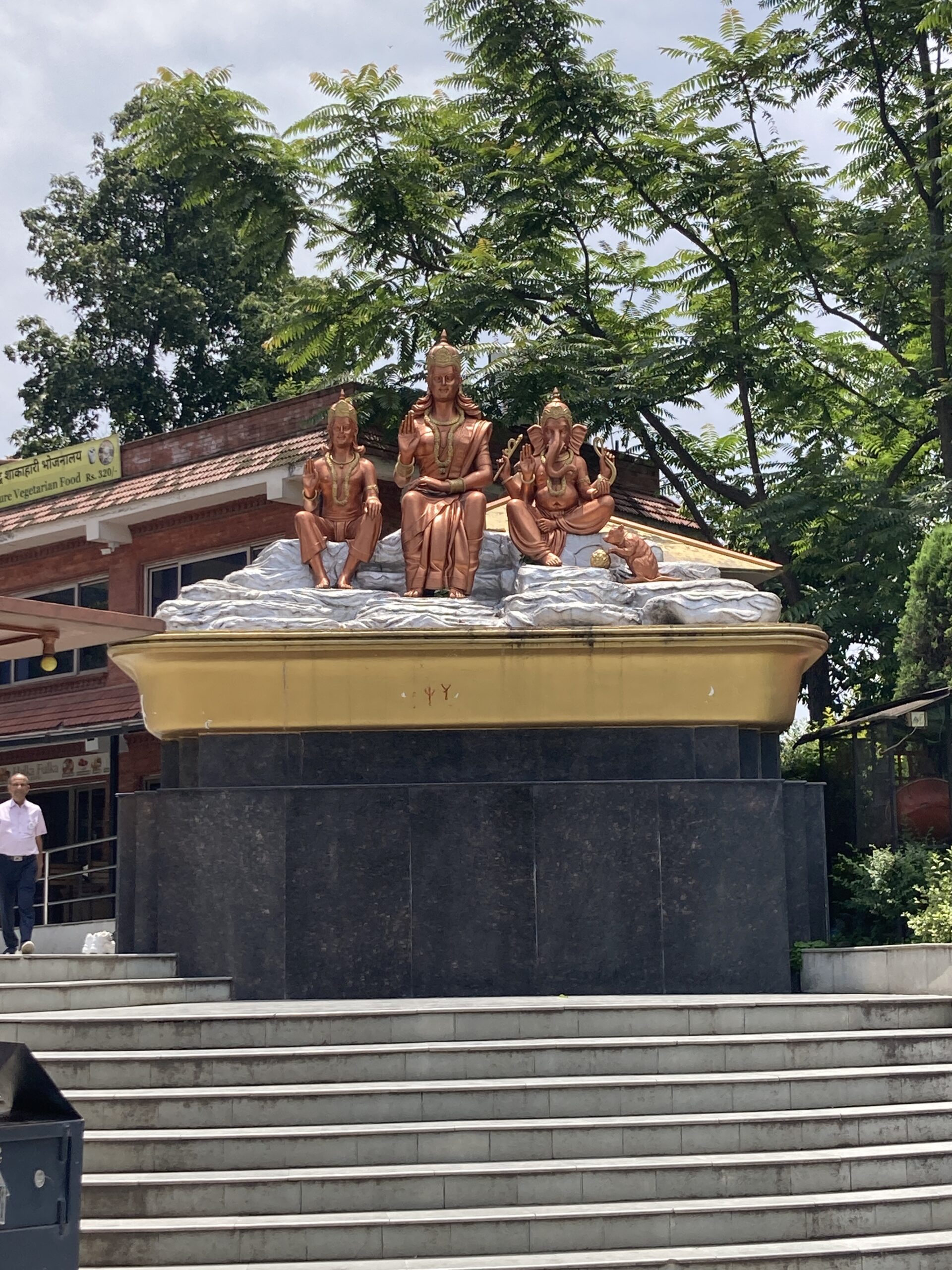
Shiva
Our first visit was to the largest Shiva statue in the world. Very impressive. 144feet tall, with Parvati, Ganesh and Skanda on a little plinth at his feet, Mahadev is here in his purple splendour with trident and cobra.
Ganesh, Parvati and Skanda
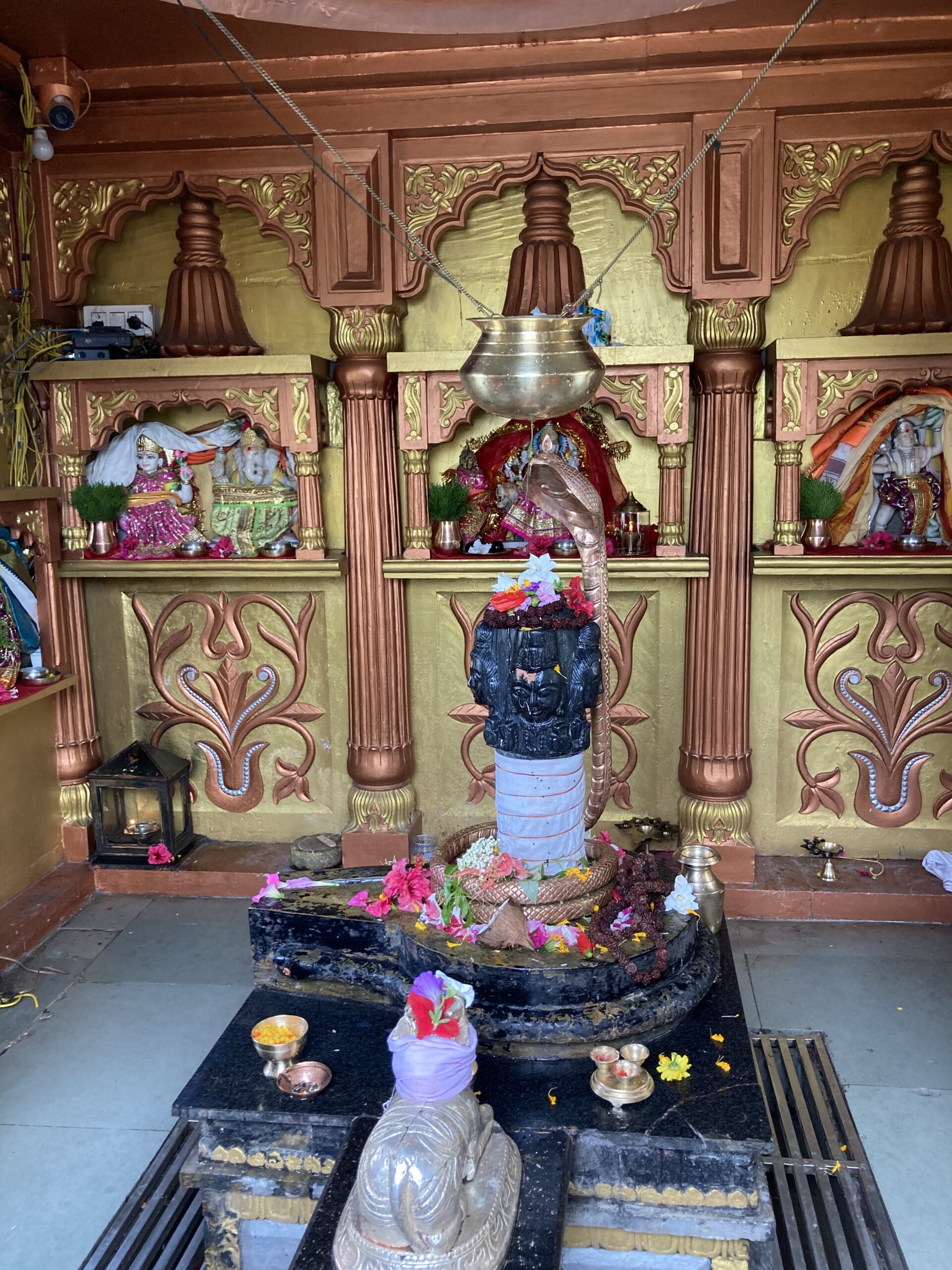
At the little shrine at his feet, the priest put a tika on my forehead, blessed me with the rudraksha beads, gave me a few little yellow flower petals from the flowers draped across the shivalingam in the shrine, which I placed upon the crown of my head, and handed me a few of the sugared sweetcorn, which I duly ate. It was very special to embrace and engage with the ritual of this Shiva puja. My guide taught me how to sing the mantra, “Om namaha shiva—-ya”
Shrine at the feet of Shiva
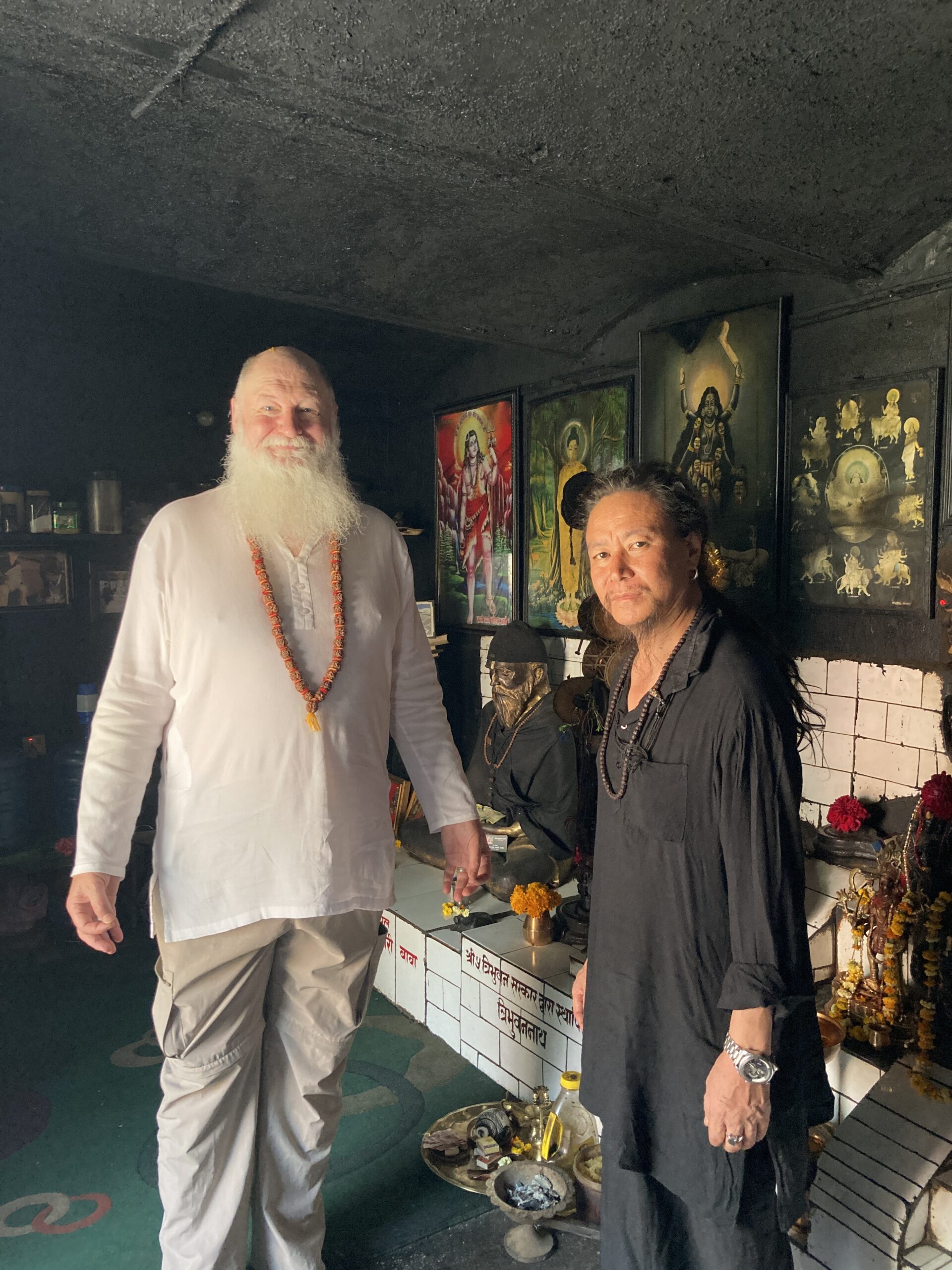
But this was just the introduction. Because we then drove to Pashupatinath. This huge complex of over 500 shrines to Shiva in his ‘Lord of the Animals’ guise was simply breathtaking, and we began it by going straight to the cave-like shrine of an Aghori Baba Sadhu. These black-linen clothed holy men follow a very special path, different to the better known white-linen clad ascetic sadhus, and their specialisation is conquering fear. This is why the aghori sadhu (who has been practicing for 32 years, I am told) has his shrine in the wall overlooking where the bodies of Kathmandu people are prepared for, and then cremated, at the shore of the sacred Bagmati river that runs through this city – Nepal’s Ganges. I am led into the shrine, and greeted by the sadhu, invited to take off my shoes, and sit facing the seated statue of the Guru Dresh. A small woman with a friendly smile shows me how and where to sit, with my fingers in the proper rudra (thumb and first finger touching, the other fingers outstretched, both hands resting palm upwards on my knees, and invited to meditate for 15 minutes. My guide goes to sit at the other end of the shrine, and he and the two women and the sadhu chat quietly. Occasionally a phone makes a sound. There is chatter just outside the shrine too. But somehow none of this matters. I am soon lost to the world, deep in meditation in this sacred space. But my back is really not up to sitting in this position for very long, and I begin to shift and feel uncomfortable. Opening my eyes, I turn to look across and my guide calls over saying just to be comfortable and take it easy. So I lie down, with my knees up, and my elbows on the ground but hands in the air, fingers in the rudra. This is much better. But inside, now, it is the mantra om namaha shivaaaaya that runs over and over in my mind. This is somehow easier than silent meditation. It is simple. I lie in this position, with the mantra in my mind, hoping to last for 15 minutes. At last, feeling a little numb in my elbows, and then realising my hands are tingling with pins and needles, I shift again, and begin to sit up. I am done. Looking at the clock on the wall, I realise I have been meditating for 25 minutes. It is quite something. The sadhu is smiling at me. He seems quite young to me, perhaps in his late 40s. His dreadlocks hanging down his back are the same colour as the black cloth draped around him. His welcoming smile is reassuring. I am invited to stand so my guide can take pictures, with my phone, of me standing with the sadhu, in particular with the statue of Guru Dresh in the background.
Aghori Sadhu
Then, suddenly, I am invited to look into the holy of holies – the sacred place at the back of the shrine I did not expect to see. My guide tells me there is a skull there. Would I like to see? I nod, and follow the sadhu into the inner sanctum. There, on a small desk, deep red all over with glistening Chandan, is a human skull. I believe it may be the head of the Guru Dresh, who taught the sadhu. I am deeply moved, my hands together in prayer of thanks, my head bowing, my lips muttering Namaste, and Thankyou. The sadhu smiles. Stepping back out into the main shrine, the sadhu puts his thumb on my third eye, presses for a while, and mutters a prayer, and I am blessed. He does the same for my guide. We both turn and place NPR500 notes in the little offering dish, and step back out into the sun. I am completely blown away. My guide tells me this was a rare experience. Usually tourists come in for 2 minutes and are gone. Being invited in to see the skull is almost unheard of – even for locals. The sadhu, apparently, told him that I had a deep connection with Shiva (for a tourist!), and he was pleased and glad to help me to honour it. It has been a deeply moving experience.
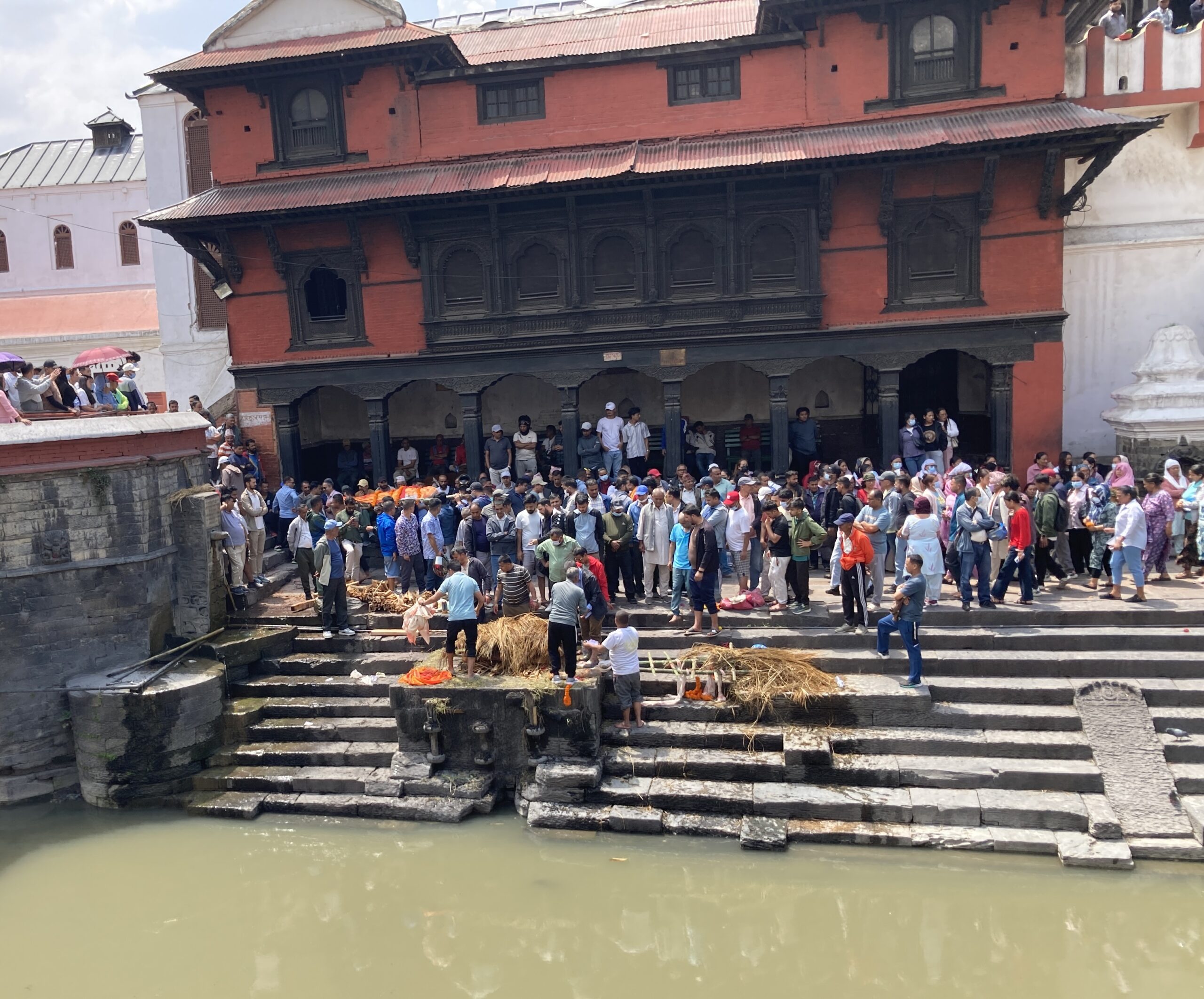
Funeral pyre
Out in the sun, we walk across a little footbridge, over the Bagmati River, and stand to watch as families tend to their dead. (The other four of Kathmandu’s rivers flow into the Bagmati, which itself later joins the Ganges.) There are four dead bodies on the paving on the other side of the river, and their families are purifying them with milk, honey, water, and tears, dressing them ready to be carried to the pyre where they are covered with straw, and set alight, in the typical open-air cremation that all the people of Kathmandu may enjoy. It is free – one only pays for milk, honey, incense, etc – and the favoured manner of seeing off the dead. It takes about 3-4 hours to burn each body, I am told.
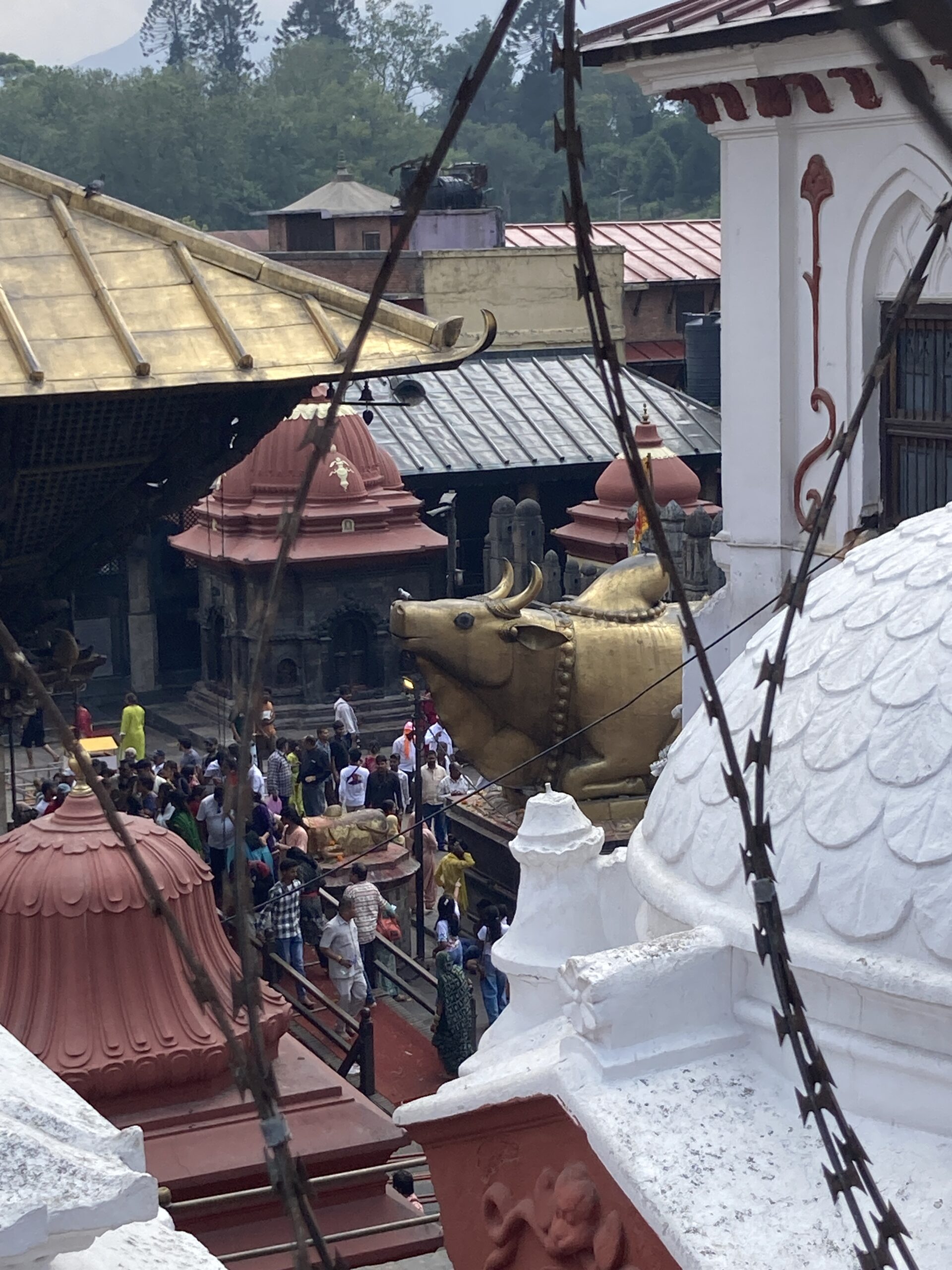
After my experience with the sadhu, somehow all this just seems quite natural, and I am not phased. It is a serious business, but not I am not discomforted. We move back across the footbridge, and round to the side of the main Pashupatinath Shrine. Only genetic Hindus are allowed within the main temple. Only five sadhus from the south of India, who have been chosen and come to Kathmandu for the last 1400 years, are allowed to touch the self-existing ShivaLingam in the centre of the main shrine. All I am allowed is a glimpse of the great Bull – shiva’s ‘ride’ – outside the main temple, where people gather on their way in and out of the shrine.
Shiva’s Bull Ride
It has been an incredible morning, and I am glad of the rest and opportunity to have some lunch, before the visit to Boudhanath – the Buddhist Stupa some five minutes away from Pashupatinath.
After lunch, we strolled around the enormous Boudhanath Stupa. Built in the 7th century CE, by a woman who made bricks with dew water she collected each morning, it is sometimes known as the Dew Stupa. Jaya tells me the prayer flags represent the five elements: Yellow earth; White wind; Green water; Red fire; Blue sky. The Enormous Eyes represent compassion and wisdom to the four directions, and the Third Eye is the eye without illusion.
The stupa is surrounded by shops, making a huge circle of friendly but vibrant capitalism around the solid representation of liberation from all that stuff…. I am – like most – enraptured with all the things, nonetheless – the Buddhist Tat, as one might call it (as opposed to Hindu Tat, Christian Tat, etc) and fork out on a magnificent Thangka painting of the Kalashakra – the wheel of time mandala – representing the four truths and the journey towards enlightenment: an ‘asset’ for one who meditates.
Finally, then, we arrive at my hotel, and western comforts.