
Post #1 | Post #2 | Post #3 | Post #4 | Post #5
29/5/26
Today is a more peaceful – and shorter – day of sightseeing, than yesterday.
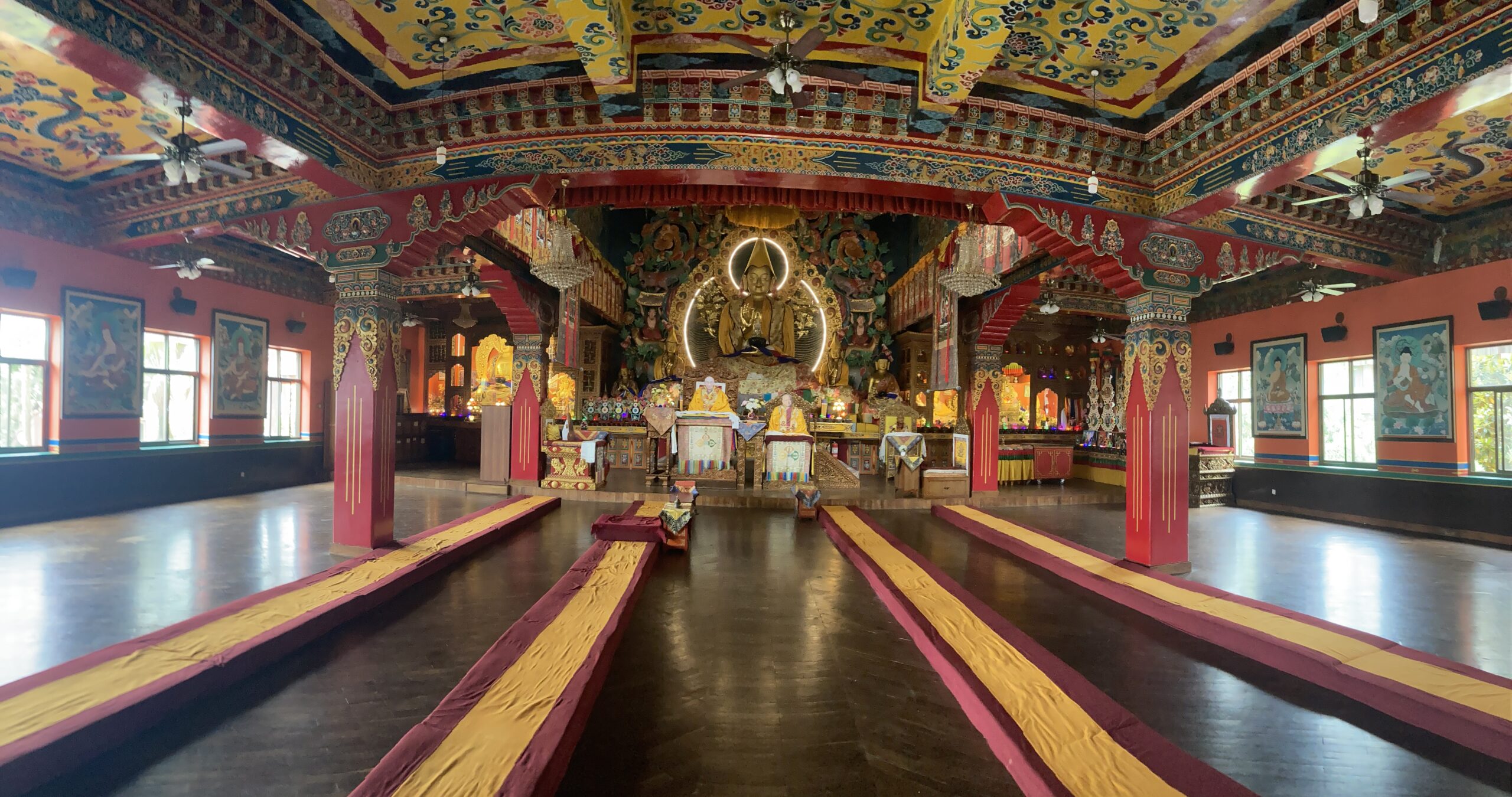
We begin at Kopan Gompa (Monastery), home of Mahayana Buddhism in Kathmandu, where I find, in the library, a little bookshop, and – amongst one or two other finds – buy a copy of Hermann Hesse’s Siddharta, a book which I read in the early 1980s, and which it would be good to read again. In novel form it tells the story of the Buddha’s life, which is the centre of all the various forms of Buddhism. The main shrine is beautiful- like that at Namobuddha – but somehow the Dalai Lama seems more prominent here. Tibetan Buddhism is a form of Mahayana and very strong here. Mahayana Buddhism includes many boddhisatvas along with the teachings of the Buddhas, and their own many and varied guides to the Way. Very strong here at Kopan is the Boddhisatva Avalokiteshvara, whose specialisation is compassion.
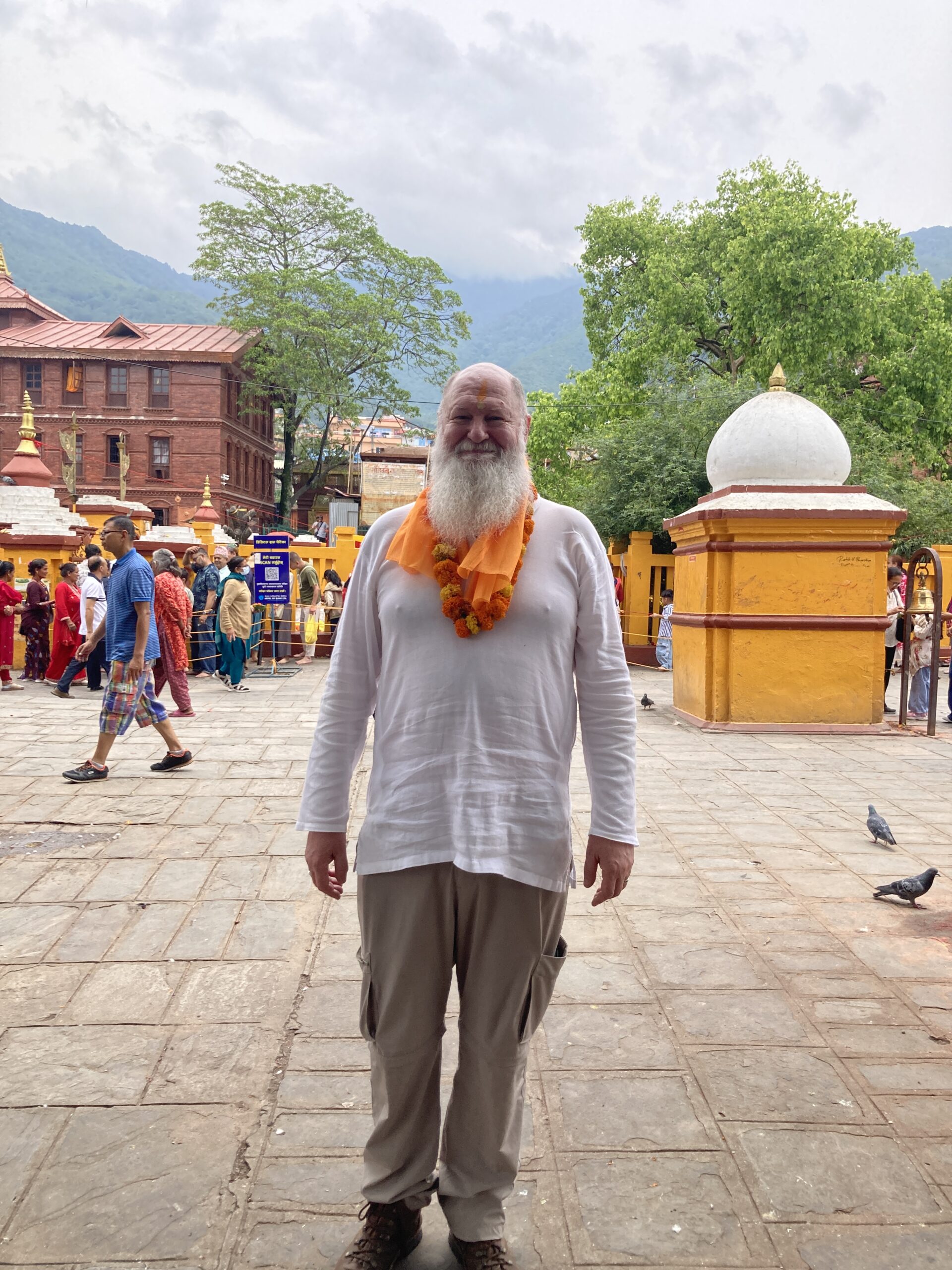
We then go to the Sleeping Vishnu – the Buddhanilthankah Temple. This 7th century carving from a single slab of basalt rock is sacred to the Buddhists, too, as an emanation of Avolkiteshvara. Completing a trinity of sanctity, this statue is also regarded by the Shaivites as the emanation of Shiva known as Nilakanta Shiva. Young boys trained at the Temple monastery preside here, chanting, and placing tika on foreheads and garlands of flowers around necks. I am very touched by the whole experience, despite the long queue! The chanting here is quite mesmerising, and learning it from my guide, I repeat the mantra as I pay homage to the shrine.
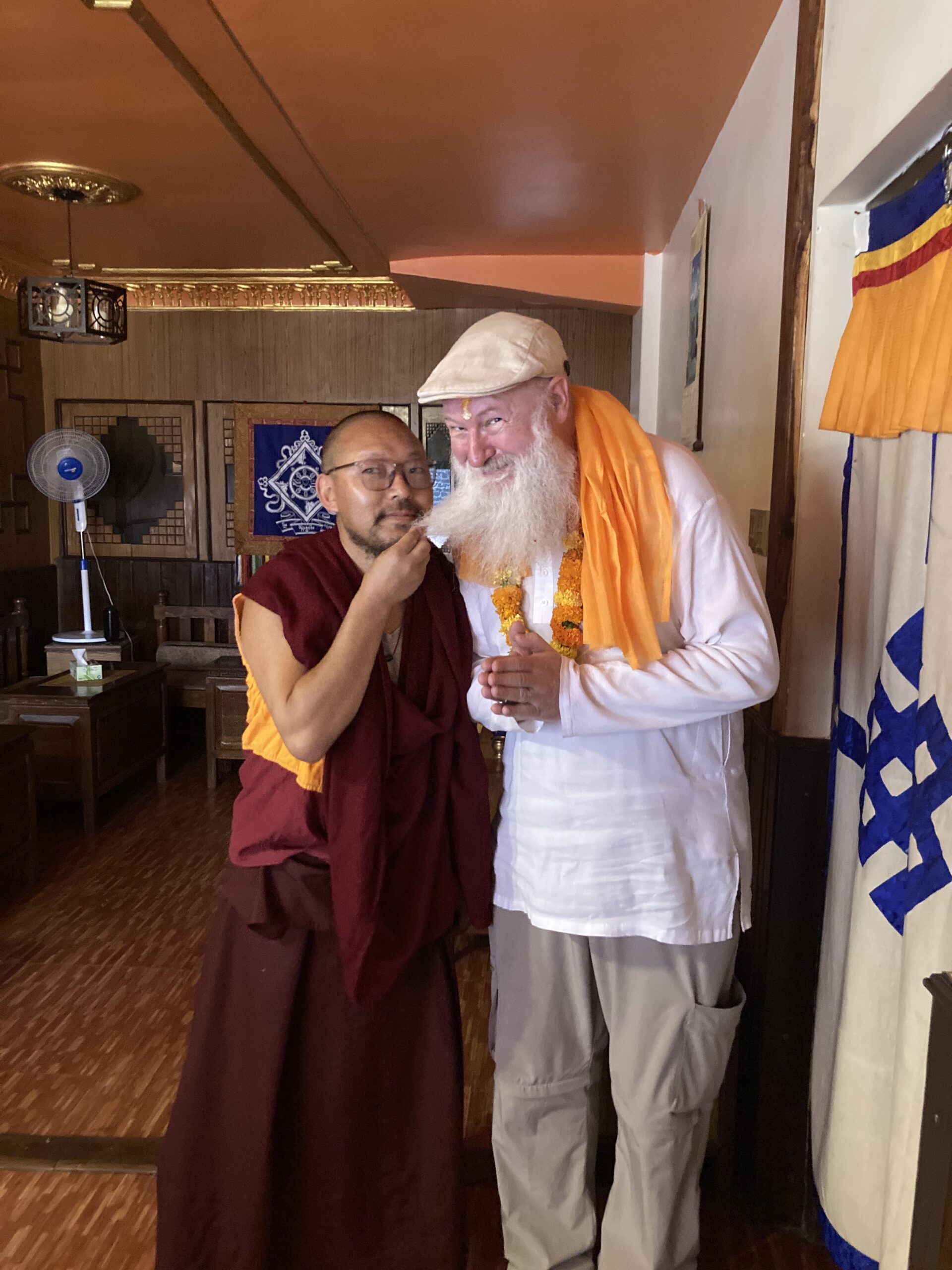
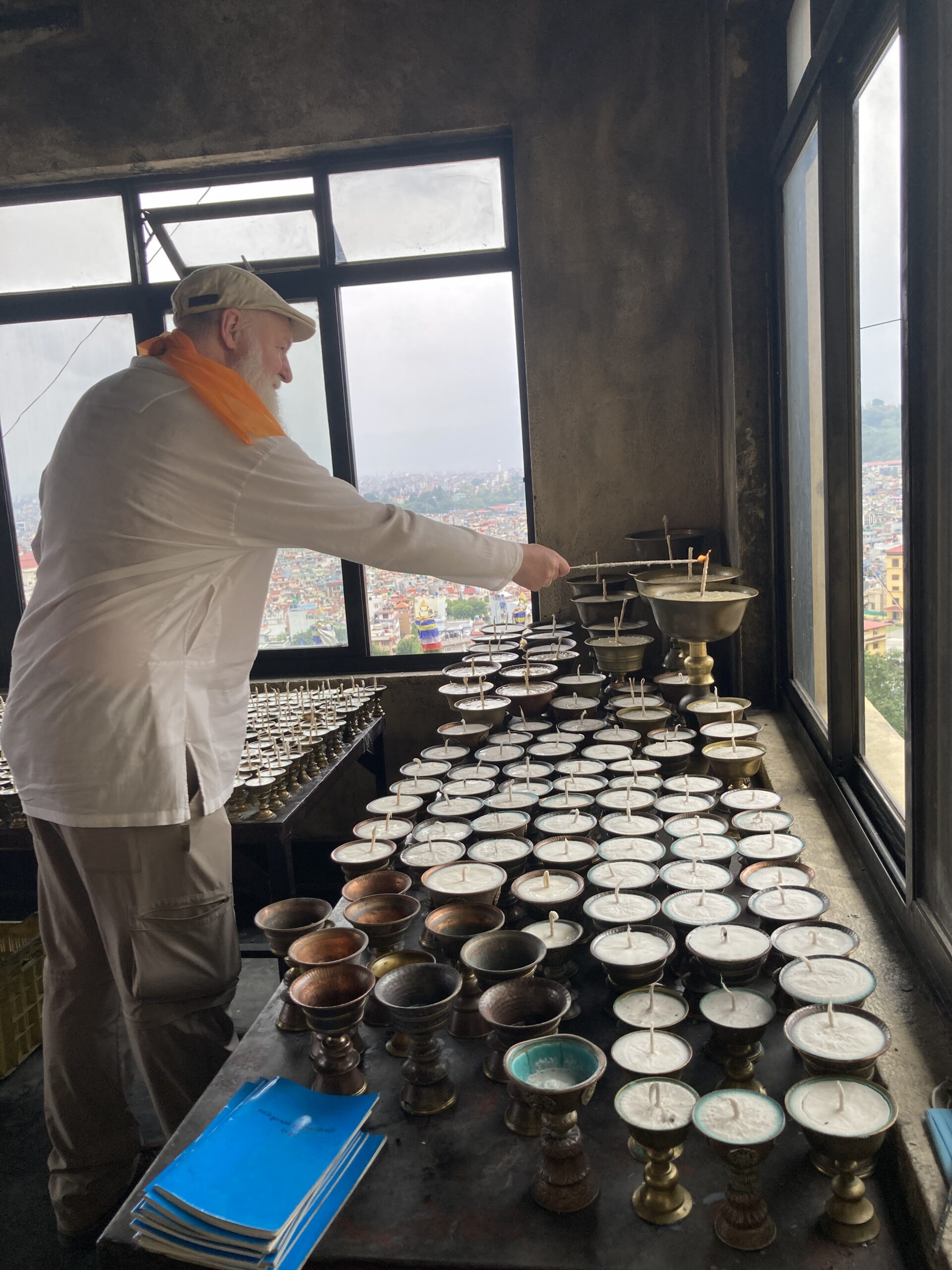
Thirdly we climb up into the hills again for our second Buddhist Temple of the day, this time the Triten Norbutse Bonpo Monastery. Bonpo is one of the lesser known schools of Buddhism, with its stronghold in the West of Nepal, rather than in Kathmandu, but there are 280 monks here, and I met a lama – who liked my beard – and invited me to light a large butter candle, saying a prayer for my loved ones, before going in to see the main the temple.
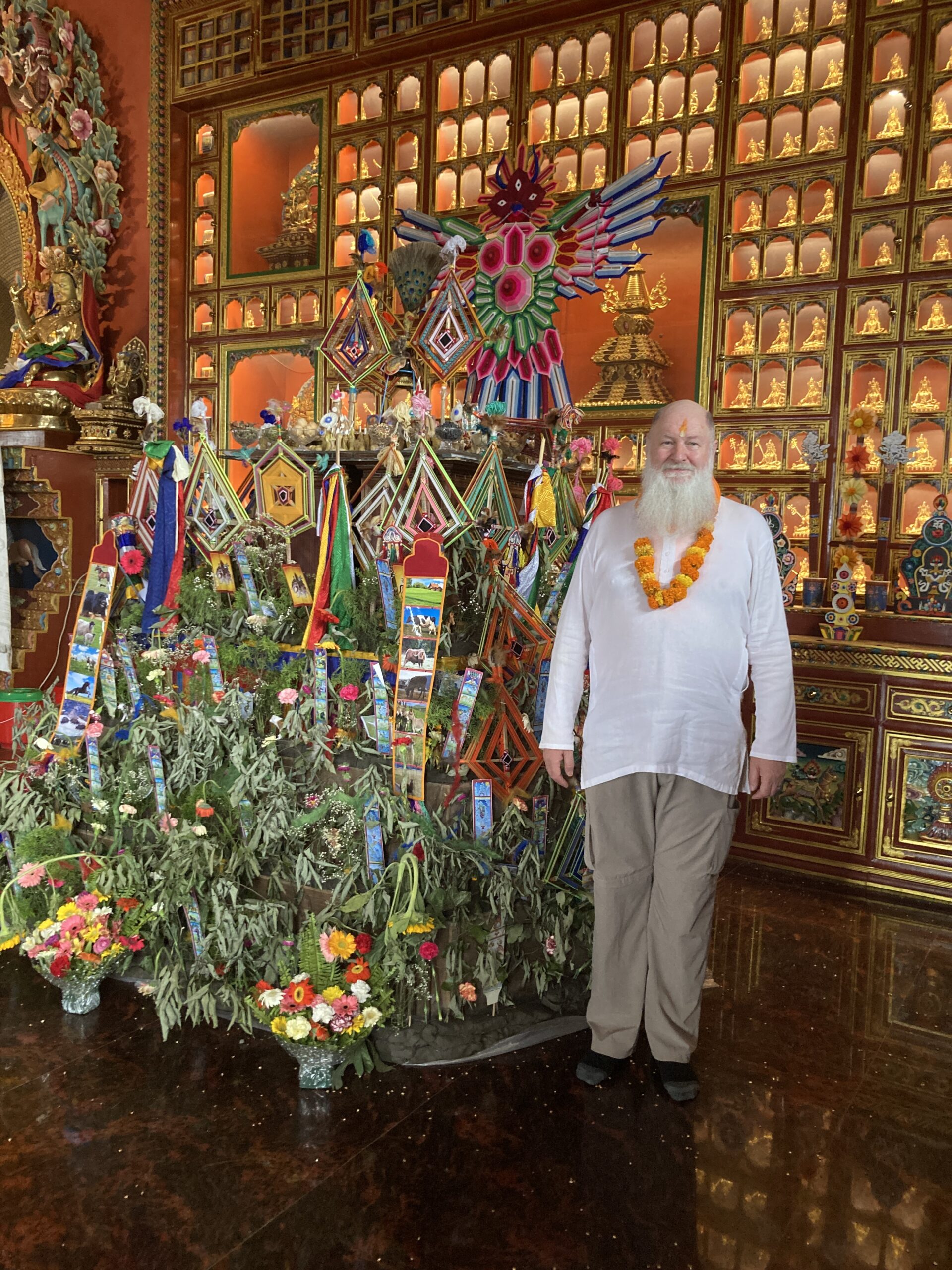
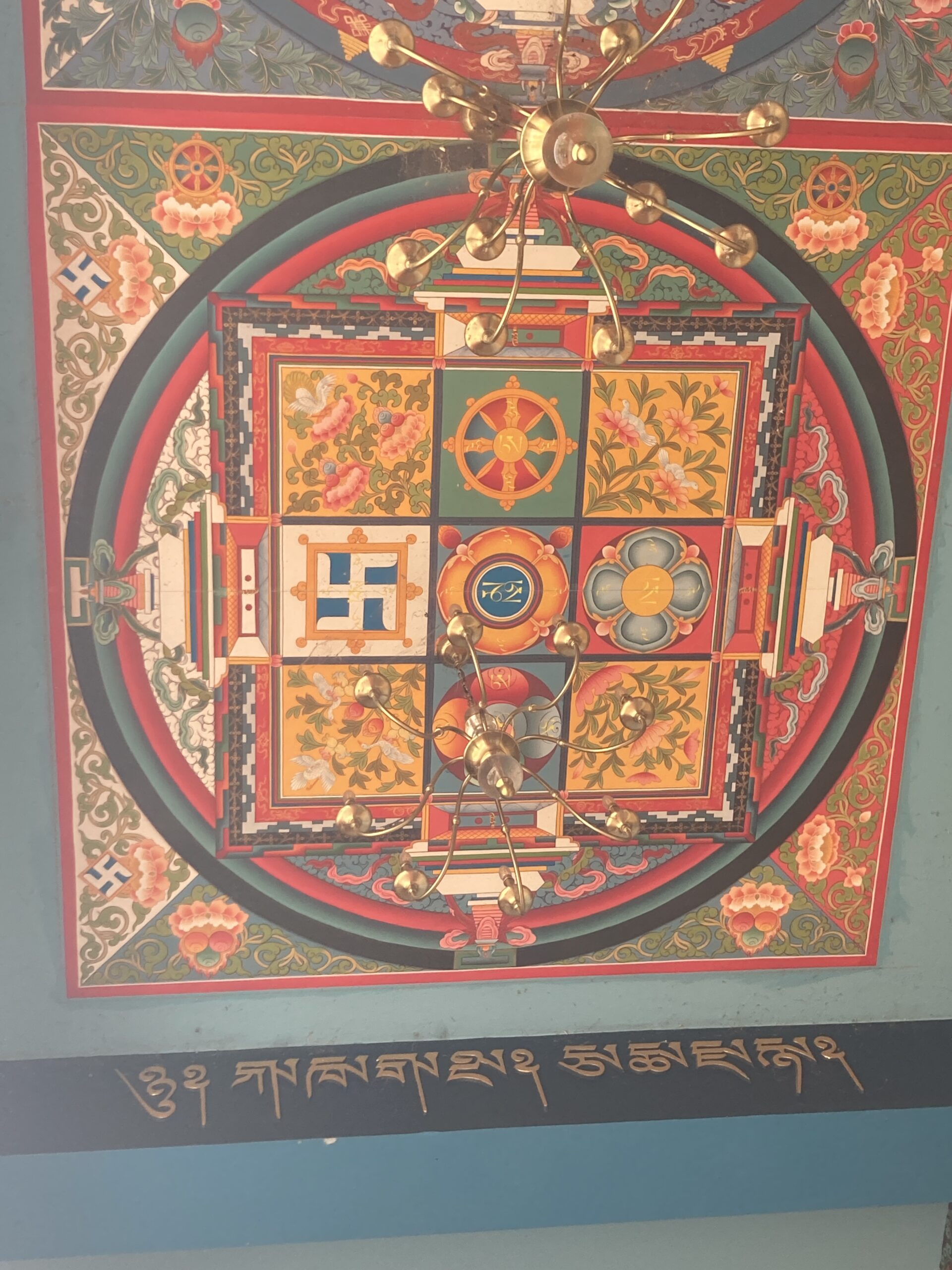
Here the very ancient (pre-Buddhist) roots of Bonpo are visible in the unique cotton mandalas, and the intensity of their relationship with the Buddha in the – equally unique – and huge mandalas painted directly onto the ceiling.
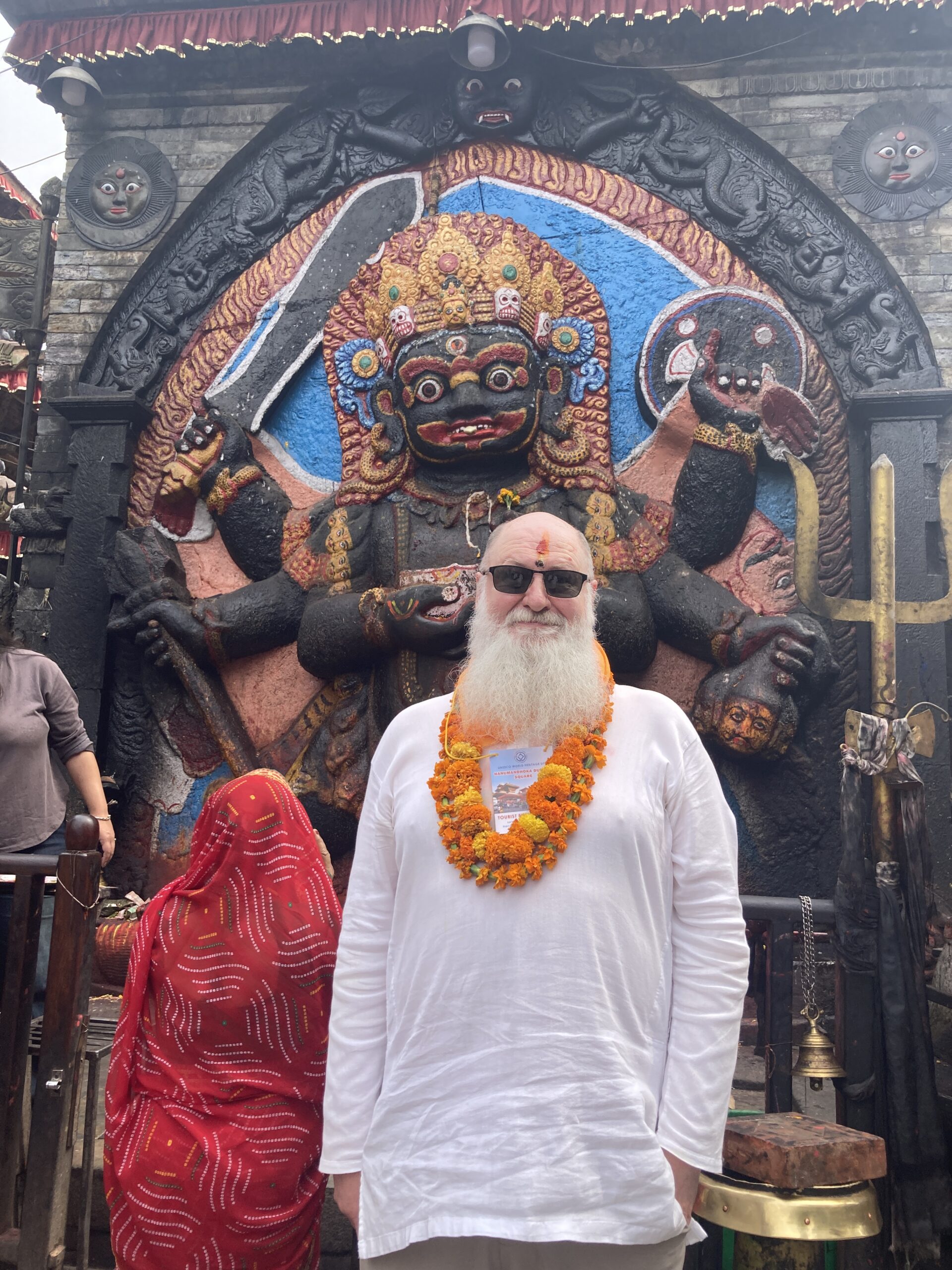
Lastly, we pass through Kathmandu Durbar Square, the medieval royal heart of the city, with its 15th and 16th century pagodas, and its early 20th century neo-classical dictatorship palace. Most interesting, for me, is the Kaal Bhairav – the great Shiva in his aspect of destroyer and protector. The presiding priest places the unique black tika of this emanation of Shiva on my forehead. In one of the many shops, I acquire a brass Kaal Bhairav to take home.
4 thoughts on “Nepal-Bhutan May 2026 #3”