Day One:
Due to circumstances beyond my control, I was unable to attend the
morning presentations. The one I most missed was Molly Holschlag’s.
The rest of the sessions I attended I have made notes of, below:
Dan Cederholm
is as entertaining as ever, making the audience laugh about
TYPOGRAPHY and design through his ‘toupeepal’ example site.
He takes a four-colour palette from an image he likes, a light and a
dark brown, a blue, and very dark grey. He uses lighter shades of these
basic colours, too. The link colour is one of the colours of the
palette, and “carries weight”. Typography he believes is very important
– and often ‘invisible’ e.g. an article “Web Design is 95% typography”.
Typefaces is not the same as typography – we have a few and this is
plenty, the typography is the art of using those fonts. AIGA website
good example – two core fonts – Verdana (mostly) and Georgia (headings
only). Letter-spacing, italicising, etc.
• Georgia – Letter-spacing: 2px; text-transform: upper-case;
looks good.
He recommends a book “The Elements of Typographic Style” and shows an example – Ampersands in a different font
• Span.amp – font-size 110% font-family:”Goudy Old Style” “Palatino” “Book Antiqua”, “Georgia”;
The website of the book is Webtypography.net
He talks about Favicons – “the most important design element of an site”?
Scale down to 16×16 or focus on fragment
Program called “Iconographer” also photoshop plug-in
Delta-Tango-Bravo website for inspiration – smashing magazine has a gallery too.
His next topic is ADD DETAIL WITHOUT ADDING COMPLEXITY
2px gradient shadow background-repeat drop-shadow on search box example.
suggestion of a container with the background image gradient instead
of border. Rounded corners on one corner rather than all four.
An important part of all this seems to be an urge to RECYCLE – to
Reuse and recycle elements of the design
His closing topic is MICROFORMATS – SEMANTIC MARKUP – can be parsed with SPARKL and GRIDDL
Brief description at Microformats.org/about – essentially semantic code snippets to use on a site, for example:
hCard – Microformat for marking up contact information.
Technorati.com service turns hCard into vCard format on the fly – the
technorati link is in the microformat. There are Dreamweaver
extensions, and Microformats.org/code/hcard/creator will make one for
you
Allinthehead.com/retro/301/can-your-website-be-you-api
Code snippets to use on your site – use more than one kind and use lots
of iterations of them and they can be played with in different ways.
hReview – for reviews of things, descriptions of things?
The presentation slides are here
Joe Clark – When Accessibility is not your problem
Joe began with his usual fun taking photos of the audience, and then showed us some photos of Islington in Toronto.
His main announcement is that the work of the WCAG Samurai
is now ready for us to view. The WCAG Samurai were modelled after the
CSS Samurai, and were a secret cadre of developers who were tasked with
developing a sensible set of errata to the WCAG 1.0 guidelines. These
errata are available to view at wcagsamurai.org as of 7th June 2007 –
today. The ‘secret cadre’ approach, or closed process, was adopted
because of its necessary contrast with the Open process at the W3C. The
open process at W3C was not working and was filled with corporations.
Joe was expelled from the process because of his complaints! The
corrections/errata worked out by the WCAG Samurai are NOT WCAG 2.0, but
corrections to WCAG 1.0.
It is only a trial run available as of 7th June. The final version,
following feedback, is to be published in three weeks time. The errata
have already been Peer Reviewed.
• 1. Jean Sampson-Wild has reviewed it – samuraireview.wordpress.com
• The Samurai didn’t know this was happening and she doesn’t know the Samurai.
• 2. Alistair Campbell has also reviewed it – reviewsamurai.wordpress.com
• The two reviewers did not know there were two reviewers
Joe is also working on the Open and Closed Project – to develop a set of
(user-tested) standards for captioning and subtitling,
audio-description and dubbing. He has been supported by the
micropatronage project since nov 06 – donations made by interested
parties, including myself.
All slides are at joeclark.org/media7
Joe invited everyone in the hall to make the following pledge:
If a browser or assistive technology can handle an accessibility problem, I won’t
I gladly take this pledge.
Moving on to specifics, Joe described the following issues to which the pledge applies.
Font-Size
Use of ‘px’ is not a problem. Browsers can expand this.
Opera page-zoom overcomes text-on-image pixellation, and is better than
IE7 page-zoom. As for Font resizing – browsers should have buttons for
font-size rather than hiding this in the menu. First-run splash screens
(that are easy to return to) for browsers should have such things to
set defaults. The browser should remember your textsize preferences for
each page.
In short, Font size is a browser problem – don’t create font resize options for your website.
Link Text and Headings.
H1->H2->H3 order is important, and should not be interchangeable – this is a paradox in the current guidelines.
Also, despite Guidelines, the same link text going to different URLs is VALID in many cases.
Gathering the links at the bottom of the page is also attacked by Joe,
on grounds that properly coded menus are already accessible.
In short, accessibility requires you write a well-structured document with a logical tab order.
With respect to the title attribute, this is permitted, not required.
The face that some browser and screen-reader manufacturers have made
software that can’t read them is ‘not your problem’.
Links to anything other than web pages should be really explicit – for example PDFs.
Joe uses a title attribute to describe the link to the PDF, and uses “PDF” inside the link text.
• document.pdf
abbreviations, acronyms, initialisms
Joe gives a great number of examples of acronyms and abbreviations that
are simply beyond the ability of HTML markup – and of acronyms like i.e.
or e.g. and q.e.d. that are fossilised and for which the expansion (in
another language) would actually confuse the issue.
Screen readers should be including acronym and exception dictionaries
properly, to recognise words better. Screen readers are poor at
recognising holographs [– e.g. read [reed] or read [red] –] where
pronunciation depends on context. Why should it be our problem to fix
the failings of the screen reader software makers? Exception
dictionaries in screen readers should be much better than they are.
E.g. “ST. GEORGE ST.” on a sign, or “St. George St”, or Italian – SpA
MAC OS X has a built-in screen reader but with a totally inadequate exeption dictionary.
In sum, Joe recommends we should use abbr and acronym without expansion
as well as with – in his experience the abbr is expanded more often than
the acronym, but only roughly two thirds of each includes an expansion.
We should only specify expansions if a reasonable reader would not
understand them (this is obviously context sensitive – the reasonable
reader of the site we are making).
Cognitive disabilities.
There is one Guideline for this – Checkpoint 14.1 – Use clear and simple
language appropriate for a site’s content. The last phrase
(emphasised) is very important.
Every site on the web CANNOT be written clearly and simply – it was originally created for discussions between physicists!
Specialist information cannot be made accessible to people with coginitive disabilities…
The information can be made accessible, with a podcast, tape, pictures etc etc, but not the webpage.
Joe states that “Personal blogs are inapplicable to accessibility for cognitive disabilities.”
So when are they applicable? Official or company blogs should comply.
[The one official blog.] From Government sites to private sector
official sites. Mapping or directions sites should be accessible to
people with cognitive disabilities. Sites providing services that would
be of use to people with cognitive disabilities (not necessarily
targeted at them) should be accessible.
There are custom screen readers for people with learning disabilities. Reading Machine – Curzwell Educational Systems.
This was a very interesting talk from Joe, and I am glad to have been
here to witness the announcement of the results of the work of the WCAG
Samurai.
Asked for my opinion, by someone sitting next to me, as the audience
broke to leave the hall, my immediate reaction was to say, well, all
this was common sense, things I had instinctively been implementing
myself for a while now, but which it was nice to hear someone of Joe
Clark’s stature to state publicly at an event such as this.
After the first Day.
Joe Clark gave Patrick Lauke several plaudits during his talk –
including a mention for his argument, on his blog, against the use of
font-size switching tools available on many websites. Patrick, as well
as Co-Lead of Accessibility Task Force for the Web Standards Project, is
webmaster at University of Salford where I am Lecturer in Information
Systems, and a colleague I have had many meetings and (both verbal and
email) conversations with. He and I have, in fact, had a number of
conversations on this very topic, in particular when members of the
Equality & Diversity department at the University asked him to put
such a tool on the University website. He refused, and the E&Q
people turned to me for my opinion. I did not hesitate to support
Patrick on the issue, with a clear explanation, as below:
————————————————————
Dear Jonathon
Thanks for getting in touch. My instinct here is to support Patrick on
this issue. Patrick is a very highly respected web accessibility
practitioner with international connections and esteem, and has in fact
had discussions with me regarding the ESF project that Peter Wheeler and I are working on. The Salford Uni website is very accessible, from a coder’s point of view.
A browser is a piece of software used to access webpages – for example
Internet Explorer – and simple things like the use of the Back button to
return to a previous page, or View->Text Size->Larger are things
that the user of such a piece of software should be aware of and know
how to use. The onus is on the web developer to ensure that text is
sized in a relative and not an absolute way, to ensure that the
browser’s textsize control will work on the webpage.
I have, incidentally, had a discussion very recently with {another
E&Q officer} on closely related issues, and an element of
first-years’ induction that included basic training in how to use a
browser for accessibility came up in conversation. There are, for
example, a number of simple steps that can greatly improve dyslexic
students’ ability to read webpages when they have been coded accessibly,
as Patrick’s pages are, but which the student needs to understand how
to apply.
The sort of text-size adjustment facility being discussed in the
correspondence is used by some websites keen to make a ‘show’ of their
accessibility. This is more a matter of public relations policy than of
making the website more accessible. In the Big Chip Awards
– the annual industry competition for Manchester’s Digital sector, for
which I am one of the Judging Panel – we have had, for a number of
years, a Web Accessibility Award. This year, we have dropped this
award, in favour of refusing to shortlist any submission that is not
accessible. This reflects a trend in the industry away from
highlighting accessibility towards assuming it as a given.
I hope these remarks are useful to you.
best wishes
David Kreps
——————————————————–
I shall post the outcome here in due course.
Following Joe’s talk, at the end of the first day, outside the Business
Design Centre, I bumped into and ‘caught up with’ both Andy Clarke and
Andy Budd, and Gez Lemon (who I met through Patrick Lauke at a
Manchester Digital Accessibility Working Group meeting, whose company
were invited to tender for the eDiscrimination website – when it became
clear that Patrick wasn’t going to have time to do it – but from whom
[for whatever reason] I didn’t receive a proposal in the end. Fluid
Creativity, a Manchester company that won the BigChip Web Standards and
Accessibility Award in 2006, eventually won the contract).
It was good to meet up with people who I had shared drinks and dinner
with in previous years. Andy Clarke no doubt remembered me in
particular in connection with university web standards education, of
course. Andy Budd and I did not mention the failed book. Chris, the A
Press publisher, does not seem to be here this year, which is perhaps a
good thing.
Very tired after the previous night and a long day, I did not, this
year, join in the end of first day drinking session, but went back to my
club (a marvellous place to stay when in town) for dinner and an early
night.
Day Two:
Jon Hicks – How to be a Creative Sponge.
Jon is designers’ designer. He admonished us to collect things – they
may be relevant later on! Things include books, magazines, carcboard
packets etc etc – good examples of typography.
“Web is not print” he reminded us, but although this is true but there
is a great deal we can learn from magazines etc about layout, grid,
colour schemes and typography. There is also found typography – signs
in the street – take a photograph and keep the idea.
There is a temptation when designing a website to look at other websites
for inspiration. This is not necessarily the right approach.
Moodboards are a useful way of bringing all stakeholders on board.
• Concentrates on the concept/mood
• Stimulates conversation
• Quick to make
• Some clients can make their own.
In sum, his message was reuse, recycle, but don’t reinvent the wheel
unless necessary! Soak up everything – you never know when you’re going
to need it.
Slides are at here.
Links he mentioned are at Del.icio.us/jonhicks/sponge
Hannah Donovan and Simon Willison – For Example….
The makers of last.fm and Lawrence.com
Hannah of Last.fm began
Success – doing what works – find out what works and do it consistently.
Process – errors. Without a lot of failure you don’t get there in the end.
1. Get your idea out – put perfection behind you!
If you don’t, someone else is going to do it. If you’re thinking about
putting a product out, put it out now and improve it as you go.
Myspace – “this website is shit” – very popular statement – but they did
something right – the fastest most internationally recognized way to
build a homepage. Pretty revolutionary at the time. What they’ve got
wrong is that it has not got better!
“Not everything worth doing is worth doing well.” Tom West.
Then go back ad revise and work on iterations.
She attacks “skin” and “styling” – these terms are getting in the way.
Comes from CSS. She admonishes us: Do not apply a skin or styling to a
product after the functionality.
Form follows function!!! – actually – Form ever follows function.
Sullivan (an architect) – first skyscraper – steel structure then
wrapped with walls – built together to be one. She shows a photo of it.
Design and development should go hand in hand.
2. Don’t release new visuals without new functionality.
New design is accepted if new functionality is included and exposed. Make it explicit what is going on, and give users choice.
3. Designers and developers work on the same team. – towards the same
goal! SCRUM practice – 5minute stand-up meeting every morning – makes a
world of difference, part of AGILE development practice. Divide up
into little teams doing little bits, put them together and get the first
iteration of the product out.
4. Do the hard stuff first. Use iterations.
Scaleable and helpful.
Internationalisation. Forces bigger releases and log-jams. English site
became first, all others second – one iteration behind. Trying to fix –
make the delay only 7 days.
ir8n
5. Use broad brushstrokes.
Do the big stuff first and then fine tune as you go along.
She offered beta access over summer 07 – write to Hannah@last.fm
Simon Willison, Lawrence.com – Doing Local Right.
Simonwillison.net
“local” – a major strategic thing for Yahoo etc etc – although the web is world wide everybody lives somewhere!
In the main, local search “sucks” – not comprehensive, accurate or up to date. Local flavour matters!
You can’t solve local problems on a global scale.
The decline of news. Craigslist destroying classified ad revenue,
undermining main revenue source for newspapers. Newspaper owns printing
press – a local monopoly. Business model undermined by the web. Old
media blames new media.
Good local sites need local knowledge.
Lawrence, Kansas did this very well – Simon worked for them 3 years ago
and thinks it’s the best in the world. Event listings, local blogs by
local citizens, full calendar, etc etc. LJworld.com another example.
Small passionate team – someone else to think about the money – intern power – treat your data with respect.
Relational databases – huge amounts of data – very important to respect
it and take the time to properly represent it in tables… make the data
detailed and useful. Django – an opensource web framework. Optimised
for building content-heavy database backed sites. Ellington is the CMS
built with django that is available commercially for other newspapers.
Django assumes you are building stuff from scratch.
It was developed at the newspaper and now available for free.
Shawn Lawton Henry – Advancing Web Accessibility.
Times have changed a lot since WCAG 1.0 in 1999.
Talk about WCAG 2.0
Shortcuts for getting into it.
WAI – several groups –
• protocols and formats working group
• evaluation and repair tools group
• research and development interest group
Process – recommendations etc
Milestones – all public – drafts etc meeting minutes etc
Public Working Draft periodically released for feedback. WCAG 2.0 has
been through several. Last Call Working draft out last year.
Substantive changes put it back – May 17th 07 new Working Draft. No
telling when it will be finished – not before 2008.
“How WAI Develops Guidelines” document available.
Developing accessible websites.
1. Understanding accessibility issues – not just a checklist of guidelines
• How People with Disabilities Use the Web
• Involving Users in Web Accessibility Evaluation
• Videos and stuff
2. Technical standards
• Shared definition of requirements – holschlag and meyer involved in
discussions, and Dreamweaver project mgr – want a single standard to
work with
• Adaptable, flexible
3. How-to ‘techniques’ for different levels
WCAG 1.0 -> guidelines and checkpoints
WCAG 2.0 -> principles, guidelines and success criteria
Motivation behind WCAG 2 – success criteria are ‘testable statements’ – easier to tell whether a webpage passes or not.
WCAG 1 -> Guideline: sufficient contrast
WCAG 2 -> Success criteria: contrast ratio of at least 5:1
WCAG 2 is intended to last for a long time and be a solid foundation. Needs to be technology neutral and flexible.
WCAG 2 Techniques are more informative and more technologically
specific, including examples. You can develop your own to meet the
success criteria.
Scripting.
WCAG 1 -> 7.1 about screen flicker
WCAG 2 -> appropriate movement allowed
Scripting now allowed because most assistive technologies can handle
them, e.g. using DOM to add content. Some scripting encouraged.
WAI-ARIA – Accessible Rich Internet Applications Suite
• Make Menus and tree controls accessible etc
• 2nd working draft out – last call soon
• tool developers mostly
• best practices guide on the way soon – for web developers
• already implemented in some browsers and assistive technologies
WCAG 2 Documents
• WCAG 2.0 – Normative
• Techniques – Informative
• Understanding WCAG 2.0 is intended as a Reference.
• “Quick Reference” now available at w3.org/WAI – shorthand full of
links to the Techniques and the Understanding documents. Can be
customised – select what technologies you are using and what success
criteria level you are aiming at and which sections you want.
• Overview – short intro for the confused
• WCAG 2 FAQ – includes an RSS feed
• Issues, Changes – explains things people might not have agreed about – particularly on validity etc
Authoring Tool Accessibility Guidelines – MySpace is an authoring tool just like Dreamweaver, etc.
ATAG 2.0 is in final working draft and waiting to sync up with WCAG 2.0
Advancing Web Accessibility
• promote understanding of how people with disabilities use the web
• ulaccess.com/justask Shawn’s book
Shawn basically gave us a quick walk-through from a very positivist
insider perspective, with no critical reflection beyond some sensitivity
about the fact that there had been disagreement through the process.
Andy Clarke – Royale with Cheese.
Andy opens with a clip from Pulp Fiction from which the Royale with Cheese quote is taken.
He wants to raise questions this time. British design – what makes it
distinctive? Englishness of Morgan or MG, or Gallic flavour that was
Citroen. Is it on the web?
“I hope that British web designers can escape from the smothering
influences of American flavoured globalised design.” Andy Clarke June
2005
Is there cultural diversity, or a bland globalised uniformity?
Definitions:
Internationalisation: Designing regional and cultural variations without changes to underlying engineering.
Localisation: Creating a design for a specific region or culture so that people can, and want to use it.
Globalisation: to extend to other or all parts of the globe; make worldwide: to globalise the auto industry.
HOFSTEDER
• Five dimensions of culture
o Power distance
o Individualism vs collectivism
o Masculinity vs femininity
o Uncertainty avoidance
o Long vs short term orientation
As a web designer one works in a way that can reach a global audience.
Are we qualified to do that? Andy says he isn’t. He is a product of
his own social and political and racial stereotypes – we are all
products of our environment.
He amuses us with his knowledge of Russian – the words for border-guard and for ice-cream. They’re the two words he knows.
He shows us the Islamic Cultural Foundation website. Is it Islamic?
Elements of the ‘Best South African Website’ say things that are Africa.
Other sites not very much. Afrigator is an African website aggregator.
Is this important?
“usability takes on an immediate and relevant cultural context” 1998 –
do the big companies with global reach take this into account. What
about
Low Hanging Fruit:
• amazon – comparison between amazon.com and amazon.co.uk not surprising
little difference. But amazon.co.jp looks the same, just in Japanese.
• HSBC – the world’s local bank – but the websites are the same the
world over, just in different languages – except China, and only in a
minor way.
• AOL – a little bit of difference
• Yahoo – looks similar mostly – differences are more economic than
aesthetic/cultural – variations further east are quite interestingly
different though. Taiwan looks pretty different, Korea even more so –
particularly internal areas – the kids area especially.
• Pokemon for Japan
• Honda Japan to Honda.com very very different experience.
Andy Emailed about 400 web designers to guage opinion on these issues. Does your country have a distinctive style?
Many respondents felt not. Some felt the opposite.
Japanese issues interesting – mix of vertical and horizontal, use of
graphics due to lack of typographic control of Japanese characters in
HTML. Japanese want to read content and then be given the choice of what
to do at the bottom of the page – sometimes a long scroll down…
Amazon model for ecommerce – should we assume it is correct? No, says Andy.
He also asked if designers looked at local culture. He challenges even
the Jakob Nielsen tenets of web design – have we really learnt
everything and for all markets?
Do web designers in your country look to the wider web for inspiration?
Many said yes – learning from each other. Some said no. There was
quite a lot about cultural influences coming from the west, and the web
being no different.
Andy goes on about Comic Books, about the Japanese versions (Manga), the
British versions, (Judge Dredd and Concrete) etc and how they were
inspired by cinema, and now the other way around (SIN CITY). There are
ways in which content is prioritised in comics through size. This can
happen on the web.
“a single universally appealing global site does not appear feasible” 2001 quote.
Mass personalisation seems to be the way forward…
CULTURABILITY – conbination of culture and useability affecting personal local and regional user-friendliness of web designs.
Andy feels we need to re-evaluate what we’re doing. It’s not going to
be useable for everybody. One interface cannot be just translated with a
few tweaks for different countries. Rolling out the Japanese version
next week, as per last.fm is a broken model.
Culturalisation: to design a web site or application that encompasses regional variations at a regional level.
Anything less is arrogant imperialism.
Perhaps what we should be doing is involving local/regional designers in
designing for their region, when making something for global reach..
Slides at www.stuffandnonsense.co.uk/events/
This is about BRAND
It’s much more than logo and colour scheme – its about what it means to
you, and cultural diversity needs to come into this picture.
Hot Topics.
Joe Clark, Dan Cederholm, Richard Ishida (W3C), Jeremy Keith, and Drew McLellan (WaSPs).
W3C chat
Andy Budd – CSS 2.2 in the meantime, coz CSS3 is taking a long time…?
Richard Ishida says there’s some really excellent stuff for
internationalisation in CSS3 for typography etc but limited number of
people working on it and the splitting it up into bits idea could well
be welcome at W3C.
Dan Cederhom says multiple backgrounds TODAY would be very nice.
But would CSS2.2 speed up browser support?
With WHATWG and criticisms of WAI is W3C as important as before?
Joe says NO. W3C seem to have taken everyone seriously, including Joe,
and this is good. Web designers are now in a post-guideline /
post-checkpoint age….
Richard – W3C has no monopoly, Javascript and IETF etc…. – HTML is
thanks to the W3C, agree it needs to be developed further. Criticism
wasn’t quite right – communication problem – users, browser + tool
developers, and standard organisations – needs to be more communication
between all. Some complaints about CSS spec going too fast for browsers
to keep up. Triangular flow of communication in a supportive way needs
to be got going. Joe asks what users? Richard says all kinds. Drew
from WaSPs facilitating communication from developers to browser makers?
Specs have been built on some of the implementations without the W3C.
HTML 5 font tag? Hopefully not.
Richard invites suggestions to the W3C. Joe complains: To post a proper
suggestion to W3C you have to do so on the list and to be on the list
have to be invited expert. Jeremy says that actually W3C does pay
attention to blogs. Joe says Opera guys also good to write to, who will
pass it on.
Site redesigns.
Dan – Boston city site.
Richard – his own, or the W3C site – general laughter. He says they are looking at improving the design.
Drew – wants W3C to stop redesigning it. Wants online banking to develop, with cleverer applications and tagging etc
Joe – airline, public utility, etc etc – all of them. Mr Gouda’s foodstore redesign.
Document-based vs application-based web.
Drew – functionality at planning phase is very difficult with
applications compared to documents. Dan – it’s usually more work
(applications rather than documents)! Dan codes rather than photoshops…
enjoys playing with Rubyonrails… Richard – Used to talk to software
engineers about user interface design, now doing this again – text
expansion from a database, etc. Layout can change in
internationalisation process… ARIA moving pretty fast… Joe – not a Java
person, no informed opinion!
Most inspirational article, presentation or book?
Drew – Zeldman’s CSS redesign of A List Apart.
Dan – The Dao of Web Design – Jon Alsopp – written 02, more relevant than ever.
Richard – Tim Berners-Lee’s “Weaving The Web”; overview of the web.
Joe – hard-core research every morning.
Educational Institutions – a lost cause / should everyone be self-taught?
Drew – EDU taskforce. Prepare a course – long process – rapidly
out-of-date. WaSPs Educational Task Force working with people in
education.
Joe – Everyone has a learning curve… …poor instructors. Be cautious.
Richard – not for W3C – they have enough trouble writing standards
Dan – should everyone be self-taught? He is – it works – but no.
One member of the audience – a web developer who has worked in
universities, took the microphone and said that the academics didn’t
come to the training sessions because they were too arrogant. This was
really insulting, and I felt really annoyed and got up to complain.
Drew insisted that no matter how many letters I have at the end of my
name I should still wait for the microphone. So I took the microphone,
and responded, as someone “with letters at the start of my name”, saying
we’d had the same conversation last year, and that I am a university
lecturer teaching web standards at Bachelors level at Salford, and it
was sad that I was probably the only one here AGAIN (no-one in the
audience contradicted me), but I am not the only one in the UK, and that
if Patrick Griffiths (the organiser of @media) wanted to bring all us
educators who are teaching web standards together, it would be great.
Conventions of design trends – are they crutches?
Dan – enjoyed Hicks ideas of looking outside of web design for inspiration
Ajax
If we dismiss Ajax as not accessible to what extent is it not our problem?
Joe – who says? It many respects it makes it things more accessible
sometimes. However, GMail is awful, incompetently badly developed.
Is it accessible? It depends. ARIA would help.
Gez Lemon has good research on these issues.
Environmental impact of what we’re doing.
The weight of the internet is 2oz – all those electrons – that requires 200million horse power to run it.
“rich” implies “poor” in Rich Internet Applications – not that rich an experience.
In the end, Jeremy Keith in particular got quite boring. There seemed
to be an attempt to be amusing by being critical, and this fails so
often. The lowest form of wit etc…
Panel didn’t like silverlight or other attempts at “rich” applications – good design is better.
Joe concluded that as a sarcastic gay vegan he can no longer make a
living. It’s all been done, pretty well, too. So he is retiring from
Web Accessibility. WCAG 2 is better, etc etc – Web Accessibility is in a
good state. Uphill battle.
Continue reading “@media2007”






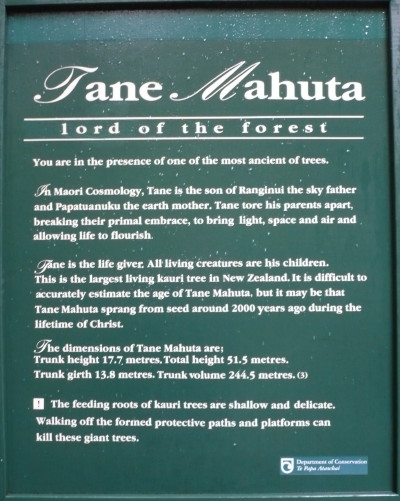



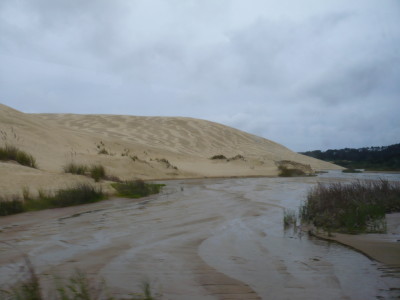 The dunes are huge, glassy, barren, and excellent for surfing down. It is actually called Sand Boarding, and two of us, with the driver, had a go. It was really quite exhilarating and woke me from the stupour the long morning drive had been lulling me into.